
Guides and resources
Underground and semi-underground containers for hotels, resorts and campsites: layout, vehicle access and screening
Underground and semi-underground containers for hospitality: organising space, vehicle access, sorting and bin screening.
Hotels, resorts and campsites must balance collection capacity, easy access for guests and service organisation without disrupting hospitality areas.
Hotels, resorts and campsites handle daily waste volumes that vary sharply with occupancy, seasonality and services on offer. Restaurants, bars, pools, common areas, accommodation and back-of-house spaces each generate different waste fractions that must be collected efficiently.
Container choice is not only about capacity. Visual impact, footprint, ease of use for guests and, above all, emptying without disturbing operations all matter.
Underground and semi-underground containers are worth considering when you want organised collection points and fewer traditional bins in high-traffic guest areas.
The right setup depends on the property layout and how collection is run.
Waste in hospitality: two flows to coordinate
A hotel and a campsite can have very different needs, but both must handle guest waste and waste from internal operations.
It helps to split the two flows.
Collection for guests
Drop-off points must be easy to find and reach without cluttering shared spaces.
In a hotel, centralised areas or dedicated deposit points may work. In a resort or campsite, more collection points are often needed, reflecting distances between bungalows, pitches, sports areas, pools and shared facilities.
Collection for staff
Kitchens, restaurants, bars, maintenance, housekeeping and management generate streams that differ from guest waste.
A technical yard where bins are grouped helps staff and allows emptying operations.
Design should cover both flows: avoid putting all activity in guest zones, or placing back-of-house bins where staff cannot reach them easily.
EU Ecolabel criteria for tourist accommodation also refer to adequate containers for guests' source separation, in rooms, on floors or at central points, depending on how the property is organised and on local collection systems.
Where to place an eco-island in a hotel or resort?
Location is one of the most important decisions.
An eco-island must be reachable for people depositing waste and for collection vehicles.
In a hotel, a service area close to back-of-house, with enough distance from main entrances, terraces and guest zones, is often a sensible approach.
In resorts with large outdoor areas, several collection points may be needed so guests do not all have to use one station.
At campsites, layout must reflect pitches, sanitary blocks, catering areas and common spaces. One central point may be enough for some sites; others need a network of distributed stations.
Before fixing the location, check:
- Space for containers and access routes.
- Distance from busy guest areas.
- Pedestrian paths and links to deposit points.
- Access for in-house collection staff.
- Whether collection vehicles can reach the station.
- Underground utilities and ground conditions.
- Landscape or architectural constraints.
The goal is a workable system: simple collection without harming outdoor quality.
For an overview of underground eco-islands and technology choice, see the guide on choosing a system.
Collection vehicle access: verify before installation
A common mistake is choosing a site based on space alone.
A container can fit the architectural design yet be hard to empty if the truck cannot get in or lacks room to work.
This matters especially at campsites and resorts with internal roads, narrow lanes, bends, slopes and traffic limits.
You need the actual vehicle specifications used by your collection contractor in advance.
Depending on technology, emptying may use a crane, dedicated grab systems or internal bins moved via hydraulic platforms.
Each method needs different working space and must be assessed against real equipment.
In particular, check:
Route access: lane width, turning radii, gradients and whether the station is reachable.
Working space: where the vehicle can stop and carry out lifting or emptying.
Headroom: trees, roofs, canopies or other obstacles during lifting.
Ground bearing: pavement condition and suitability for heavy vehicles.
Service timing: whether emptying can be scheduled to limit disruption to guests and operations.
If the contractor's truck cannot reach the island directly, reconsider the location or a configuration that matches available procedures.
Underground or semi-underground: which option?
Not every hotel, resort or campsite needs the same container type.
Fully underground systems suit projects that aim to minimise visible equipment.
Underground bells store large volumes below grade, leaving mainly deposit elements visible.
They fit curated outdoor areas, forecourts, entrances and places where architectural appearance matters.
Semi-underground systems keep part of the unit above ground and can use varied materials and finishes.
The Bunder range includes Traflux ZBin polyethylene units from 800 to 5,000 litres (semi-underground polyethylene containers) and RBin concrete and steel configurations up to 5 m³ (semi-underground concrete and steel).
For smaller points, compact UrBin Traflux units at 100, 200 and 300 litres sit in the underground litter bin family.
Choice depends on waste volumes, number of fractions, available space and emptying method.
To compare families before a technical decision, see underground or semi-underground containers: differences and criteria.
Semi-underground does not automatically mean no civil works: ground conditions, required depth and installation constraints still need checking.
Screening street bins: when full burial is not required
A fully underground island is not always necessary.
Sometimes the main issue is visible bins in outdoor guest areas, not capacity or footprint.
Examples include a hotel service courtyard, a resort sorting yard or a campsite where bins must stay accessible to staff but not in direct guest sightlines.
Screening systems can help.
Bunder offers the Secomat line: enclosures to organise and hide wheeled bins and sack stands. Configurations are in container screening.
They can wrap standard bins from 120 to 1,100 litres, tidy the station, protect containers and align finishes with surroundings.
Screening improves aesthetics without replacing the whole collection system.
These enclosures are not the same as underground or semi-underground containers: they serve a different purpose.
Sizing containers for a hotel, resort or campsite
Capacity should not be based on room or pitch count alone.
Consider average occupancy, peak periods, services offered and emptying frequency.
A resort with restaurant, bar and pool typically produces more waste than a breakfast-only hotel.
A campsite in high season may need different volumes and frequencies than in low season.
For a sound estimate, gather:
- Number of rooms, bungalows or pitches.
- Capacity and average occupancy.
- Restaurants, bars, pools and other services.
- Fractions to collect.
- Typical quantities per fraction.
- Emptying frequency.
- Common area size and distribution.
- Collection vehicles in use.
This supports the number of stations, required capacity and configuration.
Seasonality weighs heavily: sizing only on annual averages may fail during peak occupancy.
For residential complexes with similar user logic but different governance, compare with underground bins for condominiums and residences.
Bunder Waste: collection solutions for hospitality
Bunder Waste supplies underground, semi-underground and screening systems for many collection contexts, including tourism and hospitality.
The range covers underground bells, Traflux ZBin and RBin, compact UrBin units and Secomat screening.
Technologies address both capacity and space organisation, with configurations assessed against available vehicles and site conditions.
Bunder Company supports customers on volumes, fractions, access and emptying. Bunder distributes in Italy; capacities and finishes mentioned refer to currently published product families, not a ready-made sizing for hotels or campsites.
See the underground and semi-underground range or screening for bins and sacks.
For hotels, resorts and campsites, start from an overall review of space and waste handling to find a system that fits how the property runs.
FAQ
Are underground containers suitable for hotels?
Yes, when a hotel must handle several fractions in one organised area while reducing visible bins. Configuration depends on quantities, space and collection vehicles.
Which containers suit a campsite?
It depends on pitch layout, capacity and services. Semi-underground units can suit distributed deposit points; underground bells may fit central stations with large volumes.
Can semi-underground containers go near a pool or relax area?
Placement near common areas can be considered if operational distances, user access and emptying and maintenance conditions are met.
How can bins be hidden in a resort?
When full burial is not needed, screening such as Secomat can organise and protect wheeled bins and sacks with a tidier appearance.
What information is needed for a proposal?
Useful inputs include site layout, guest numbers, services, collected fractions, estimated quantities, emptying frequency and collection vehicle details.
Products that may fit your project
For projects like yours, many Bunder Waste customers start with these solutions. Compare capacity, use case and configurations before you get in touch for a quote.
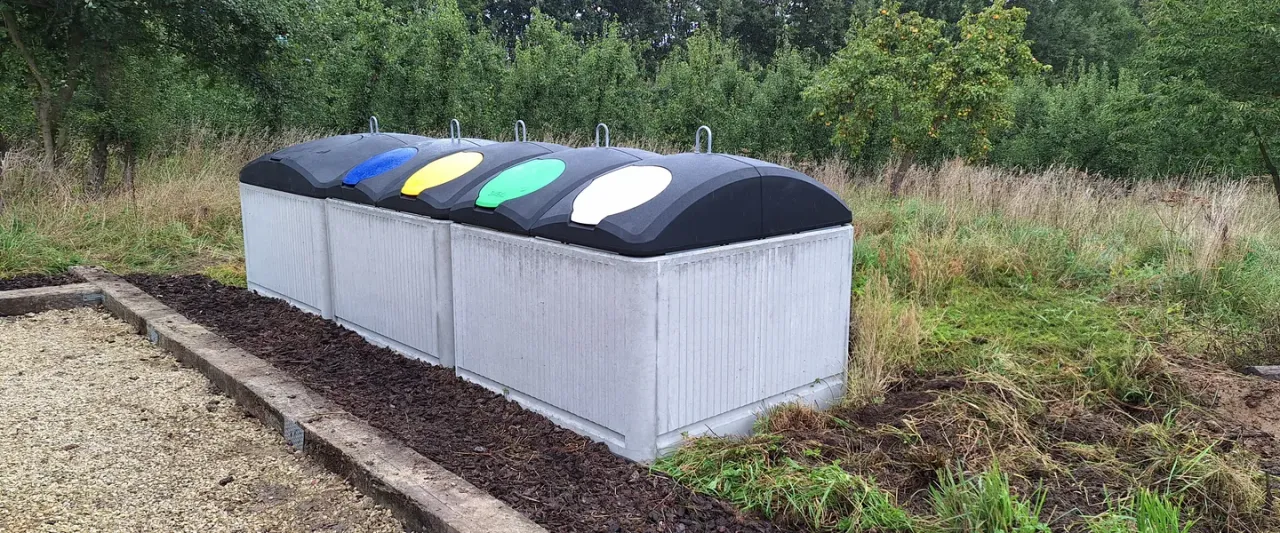
Traflux · RBin
Semi-underground steel containers
Bunder Company semi-underground concrete containers combine the robustness typical of fully underground systems with easier installation.
View product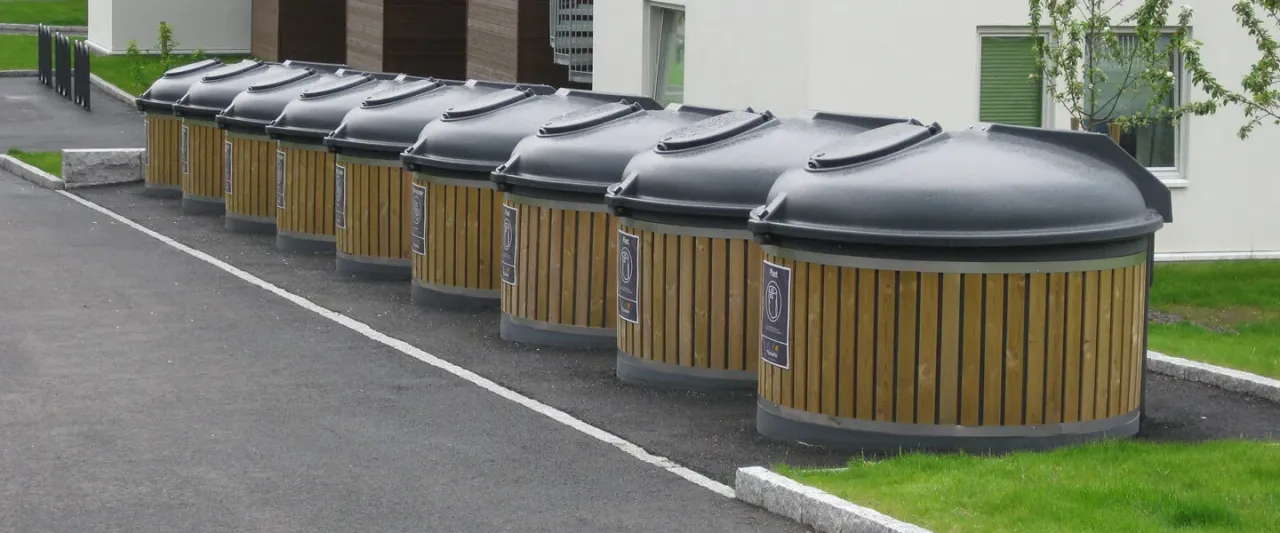
Traflux · ZBin
Semi-underground polyethylene containers
Semi-underground and above-ground polyethylene bell units for source-separated collection: configurable with internal bag, PE tub or steel liner, capacities up…
View product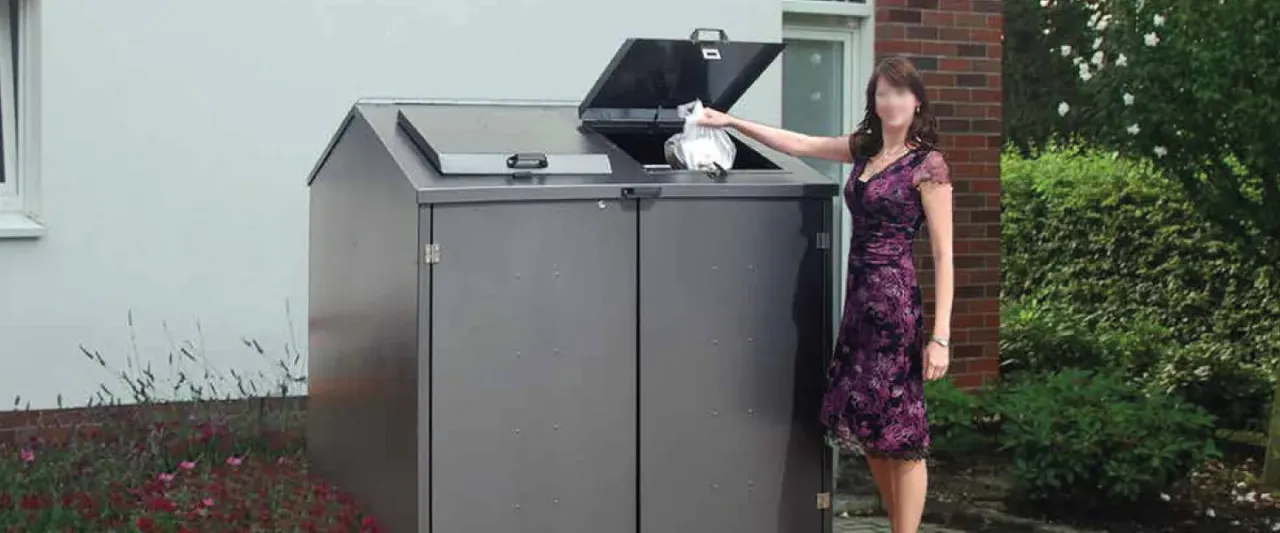
Screening
Container screening enclosures
For historic centres, residential complexes and public areas such as service stations, parks or marinas, Bunder Waste offers container screening enclosures to…
View product


