
Guides and resources
Underground or semi-underground containers: differences and selection criteria
Underground and semi-underground are not the same: construction, visual impact, maintenance and vehicle compatibility to assess at design stage.
Underground or semi-underground containers: differences, benefits and selection criteria
The difference between a fully underground container and a semi-underground one is not only how much of the container stays visible.
What changes includes the relationship with road level, civil works required, integration with urban space, how the system is accessed, emptying type and, in some configurations, how the contractor must organise maintenance.
The choice should therefore not start from “which of the two is better?”, but from a more concrete question:
how integrated must the system be in the area, and what conditions must it meet to work with the planned collection service?
A fully underground system may be indicated when the priority is minimising equipment visible at surface level. A semi-underground system may become relevant when you want to keep part of the structure above ground, in a configuration that can simplify insertion in certain contexts.
The two families also include very different technologies. The technical catalogue on contenitori-interrati.it includes, for example, underground bells of 3, 4 and 5 m³, platforms for 1,100 and 1,700 litre bins, platforms for stationary bins of 2,400 and 3,200 litres, and various semi-underground systems with capacities up to 5 m³ depending on configuration.
What really changes between underground and semi-underground?
The most immediate distinction is physical.
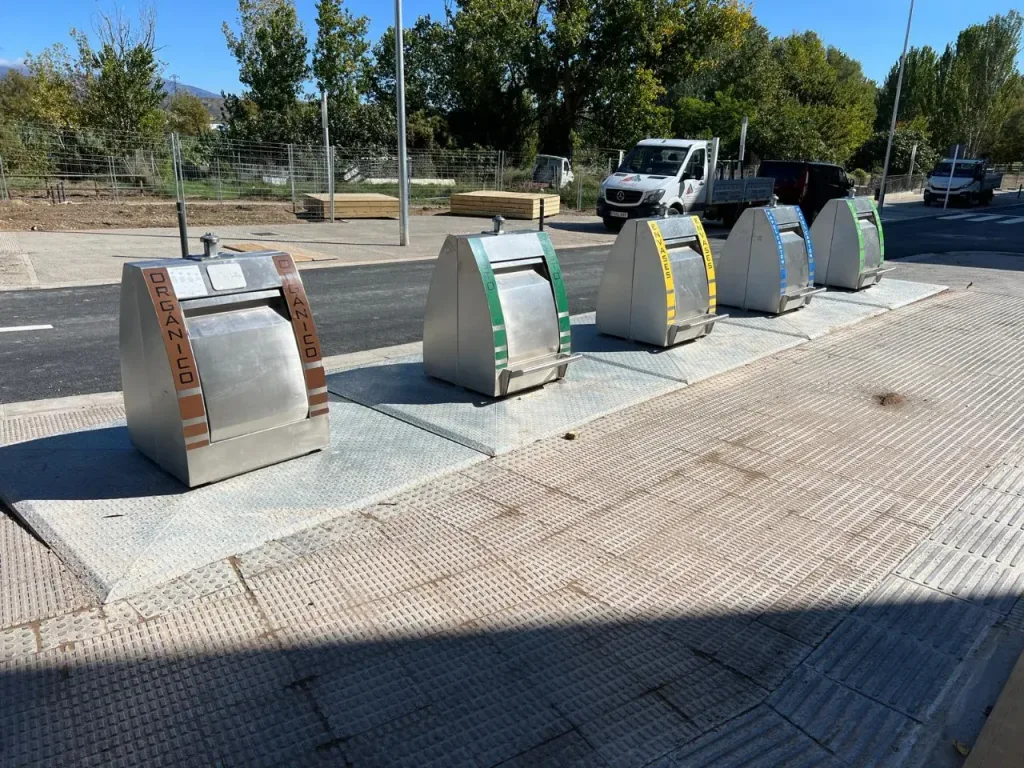
In a fully underground system, the main collection volume is below ground level. At the surface remain elements needed for deposit, such as chutes, inlet towers or other access devices.
In semi-underground systems, part of the structure remains visible above ground. The container still uses volume below level, but the configuration does not require the whole system to disappear under the paving.
This has design consequences.
| Aspect | Fully underground system | Semi-underground system |
|---|---|---|
| Visible presence | Limited to deposit elements and finishes | Part of the structure remains above ground |
| Excavation works | Generally more significant, as useful volume is below level | May be less deep, depending on configuration |
| Urban integration | Particularly suited when visual clutter must be minimised | Depends on shape and finish of the above-ground part |
| Configurations | Bells, hydraulic platforms and other solutions | Bells and containers with different shells and internal containers |
| Emptying | Depends on system: bell lifting, platform and compatible vehicle | Often via mechanical lifting in bell configurations |
| Site adaptability | Requires thorough subsoil verification | May be simpler in some contexts, but site verification is still required |
| Typical contexts | Urban areas, squares, historic centres, areas where visual impact is a priority | Suburbs, extra-urban areas, rural zones, ports and marinas, depending on configuration |
The table does not identify a universal solution. It is a first grid for what must be verified before final design.
Fully underground containers: when volume must disappear below road level
Fully underground systems on the Bunder Waste site belong to several categories.
Underground bells have stated volumes of 3, 4 and 5 m³ and are emptied via lifting systems such as Kinshofer, double hook or single hook, depending on configuration. The system uses a monolithic prefabricated reinforced concrete shell and presents inlet towers at the surface through which users deposit different fractions.
Hydraulic platforms, by contrast, are designed to place bins inside an underground structure and bring them to road level during emptying. The Bunder Waste site offers configurations for 1,100 or 1,700 litre bins, associated with rear-loading compactors, and configurations for 2,400 or 3,200 litre stationary bins associated with side loading.
This difference matters because “underground container” does not mean a single technology.
Underground bell and platform do not solve the same problem
An underground bell is essentially a high-capacity container placed below level and lifted for emptying.
An underground platform instead creates infrastructure in which a bin continues to be used according to a specific loading method.
The second solution can therefore be particularly relevant when the contractor wants to maintain some continuity with containers and vehicles already in use.
Platforms for 1,100 and 1,700 litre bins, for example, are explicitly associated with conventional rear-loading compactors.
The choice between the two configurations should therefore relate capacity, fleet, space and emptying method, not appearance alone.
Semi-underground containers: the above-ground part changes the project
In a semi-underground system part of the container or shell remains above ground.
The Bunder Waste site includes configurations with external polyethylene shells and internal containers in polyethylene, steel or internal bag, as well as systems with concrete shells and internal steel containers. Stated capacities depend on the model and include, among others, 3 and 5 m³ configurations; there are also solutions specific to the organic fraction.
A concrete and steel configuration on the Bunder Waste site uses a monolithic reinforced concrete shell and an internal steel container. The above-ground part can be finished in different ways and, according to the described configuration, emptying is by gravity via single hook, double hook or Kinshofer, without hydraulic or electrical components.
This example shows why “semi-underground” is not synonymous with a simple system.
A semi-underground system can also consist of several technical elements and accessories, and the final solution depends on the combination chosen.
Depth and civil works: compare on the real site
The level difference suggests one of the main selection criteria: how deep can you technically excavate?
A fully underground system concentrates most of the volume below ground level. Before defining position and dimensions you must therefore verify subsoil conditions, underground utilities, ground nature, water presence and access needed for installation and maintenance.
A semi-underground system can, depending on configuration, reduce the volume placed below level. That can simplify insertion on certain sites, but it does not automatically mean simple excavation or lower cost.
The manufacturer itself describes cement and steel semi-underground systems as combining characteristics of underground systems with easier installation.
Verification must still be done on the specific project.
A network at shallow depth, problematic ground or the need to reinstate special paving can radically change feasibility.
In historic centres the main criterion may be urban integration
When the goal is to minimise container presence in public space, a fully underground system has an obvious characteristic: the main part of the equipment does not visually occupy the surface.
That is one reason underground systems are also used in historic centres.
The City of Rimini, for example, has progressively replaced street bins in the historic centre with underground eco-recycling islands. The project included stations with five containers for glass, organics, paper/cardboard, plastic/cans and residual waste.
This does not mean full burial is mandatory in historic centres.
It means rather that, when visual impact and public space quality weigh heavily, a fully underground configuration naturally enters the alternatives to assess.
Where semi-underground may make more sense
Semi-underground systems can be relevant when the design goal does not require the entire volume to disappear underground, or when site characteristics make a configuration with part above ground useful.
The Bunder Waste site indicates contexts such as suburbs, extra-urban areas, rural and mountain zones, ports and marinas for these solutions. For steel and cement systems it also indicates extra-urban areas, suburbs and wide streets.
That use is consistent with a precise physical characteristic: the above-ground component can be designed and finished as part of the surroundings, without placing the whole system below paving.
In some polyethylene configurations, the Bunder Waste site also offers above-ground containers with the same design as semi-underground systems precisely on sites where excavation is not cost-effective.
Capacity: do not compare cubic metres alone
Saying a system is 5 m³ is not enough to know which solution fits.
Capacity should be read together with:
- number of users;
- fraction collected;
- quantities produced;
- emptying frequency;
- seasonality;
- non-domestic users;
- available space;
- vehicle used for collection.
A 5 m³ bell and a 5 m³ semi-underground system may have the same nominal volume but suit different operational configurations.
Even within one family volumes can differ. The Bunder Waste site indicates, for example, underground bells of 3, 4 and 5 m³, while semi-underground containers include different models and capacities depending on structure and fraction served.
The design question should therefore be:
what useful capacity does the station need and how must it be emptied?
Not simply:
which container has the largest volume?
Compatibility with the vehicle can decide the choice
This is probably the most important criterion for a contractor.
An underground container must be compatible with the system that empties it.
For solutions on the Bunder Waste site the relationship is explicit:
- underground bells: dedicated lifting systems, such as Kinshofer or hooks;
- platforms for 1,100 and 1,700 litre bins: rear-loading compactors;
- platforms for 2,400 and 3,200 litre stationary bins: side-loading compactors;
- semi-underground bells: mechanical lifting systems defined by configuration.
A new station should therefore not be designed separately from the fleet.
Before final choice it is advisable to verify:
- vehicle type;
- lifting system;
- stopping position;
- lateral or rear space required;
- operational emptying sequence;
- ability to use the vehicle with traffic and pedestrians present.
A technically valid container incompatible with the available vehicle is not a working solution.
Maintenance: the system must be accessible when something fails
Assessment should not stop at routine emptying.
You should also consider:
- access to components;
- cleaning;
- periodic inspections;
- any hydraulic systems;
- any electrical devices;
- safety elements;
- management of the underground chamber;
- extraordinary interventions.
Bell solutions with gravity emptying have a different operational structure from hydraulic platforms, which introduce mechanical and hydraulic components dedicated to lifting.
That does not make one technology better than the other. It simply changes what must be maintained and checked.
For a supply to a municipality or contractor it is therefore useful to ask not only “how is it emptied?”, but also “how do you intervene on the system when normal operation is not available?”
Drainage and water management are not secondary details
When a significant part of the equipment is placed below level, rainwater and subsoil conditions enter the project directly.
Depending on configuration, you should assess:
- waterproofing;
- water management;
- shell characteristics;
- chamber integrity;
- water table conditions;
- accessibility during maintenance.
For underground bells described on the Bunder Waste site, for example, the prefabricated shell is indicated as monolithic reinforced concrete and watertight.
That cannot however be transferred automatically to every underground or semi-underground system.
Materials, chamber structure and water management must be verified on the specific configuration planned for the project.
Installation differences can affect overall cost
Comparing container price alone is not enough.
A complete underground solution may require excavation, structural works, utility management, paving reinstatement, installation and commissioning.
The same logic applies to a semi-underground system, although buried depth and civil works configuration may differ.
An AMIU Puglia 2025 tender for underground eco-recycling islands in Bari is instructive: the procedure explicitly covered supply and installation, not containers alone.
That is a useful criterion when comparing private quotes too.
Economic comparison should distinguish at least:
Container price alone does not necessarily represent the cost of the intervention.
Which solution to choose by context?
A first selection can be set out as follows:
| Situation | Solution to explore |
|---|---|
| Historic centre with strong architectural integration needs | Fully underground system |
| Public space where visible equipment must be minimised | Fully underground system |
| Contractor with rear-loading compactors and wheeled bins | Underground platform for bins |
| Contractor with side-loading compactors and enough space for lifting | Platform for stationary bins |
| Need for high capacity with compatible lifting system | Underground bell |
| Suburb or extra-urban area with available space | Semi-underground system to assess |
| Port, marina or area where full burial is not a priority | Semi-underground system to assess |
| Site where full excavation is problematic | Compare semi-underground and other configurations |
| Area with subsoil constraints | Preliminary feasibility before product choice |
The table guides the project; it does not replace technical verification.
Is an underground system always more expensive than a semi-underground one?
It cannot be stated in absolute terms.
Civil works quantity can change, but total cost also depends on:
- dimensions;
- number of containers;
- structure type;
- excavation;
- utilities;
- paving;
- site accessibility;
- lifting systems;
- plant;
- access control;
- sensors;
- installation;
- planned maintenance.
A semi-underground system can reduce some installation complexity in certain contexts, but that does not automatically mean a lower overall cost.
Conversely, a fully underground system can align with an urban project where reducing visual clutter and surface occupation is a concrete priority.
Economic comparison should therefore be on the complete project, not equipment alone.
How to choose without starting from the product
For a municipality, designer or contractor, the most effective path is to define requirements first and only then compare products.
1. Define the context
Is it a historic centre, suburb, residential area, tourist zone, port or extra-urban area?
2. Map the service
Which fractions must be collected? How many users are served? What is emptying frequency?
3. Analyse the fleet
Which vehicles are used today? What lifting systems do they have? What operational space do they need?
4. Verify the site
How much space is available above and below ground level? Where are utilities? What paving must be reinstated?
5. Define capacity
Volume must match actual flows and collection frequency.
6. Compare underground and semi-underground
Only at this point does it make sense to assess which technology best meets the constraints identified.
7. Define operation and maintenance
The configuration must remain manageable in routine and extraordinary interventions too.
This process reduces the risk of choosing a technology on appearance or nominal capacity alone.
Underground or semi-underground: the decision depends on four balances
The final choice can be read through four relationships.
Territory and infrastructure.
How much can the project change existing subsoil and surface?
Service and technology.
Which system allows a collection method consistent with the fleet?
Capacity and frequency.
What volume is really needed and how often must it be emptied?
Aesthetics and operability.
How much does urban integration weigh compared with ease of installation, operation and maintenance?
A well-sized project holds these four elements together.
There is no “best”: there is a configuration consistent with the site
A fully underground system makes sense when reducing visual clutter and integrating into public space are important goals and when subsoil conditions allow the required infrastructure.
A semi-underground system can be more consistent with contexts where part of the structure can remain above ground and where site conditions make a configuration easier to integrate interesting. Solutions published on the Bunder Waste site are also aimed at suburbs, extra-urban areas, rural zones, ports and marinas.
Technical choice should therefore relate site, service, vehicles, capacity, civil works and future management.
To explore individual configurations, see the section on underground eco-recycling islands or compare semi-underground containers and underground bell containers directly.
Products that may fit your project
For projects like yours, many Bunder Waste customers start with these solutions. Compare capacity, use case and configurations before you get in touch for a quote.
Sotkon · APTO
Underground bell-shaped containers
Sotkon’s APTO system, distributed in Italy by Bunder Company SRL under Bunder Waste, holds 3 to 5 m³ below grade with a monolithic shell, hot-dip galvanised st…
View product
Sounete · Back
Pedane per cassonetti carrellati
Sounete Back hydraulic platforms, distributed in Italy by Bunder Company SRL, bury two to four wheeled bins: MRT chutes at street level, waste below grade and…
View product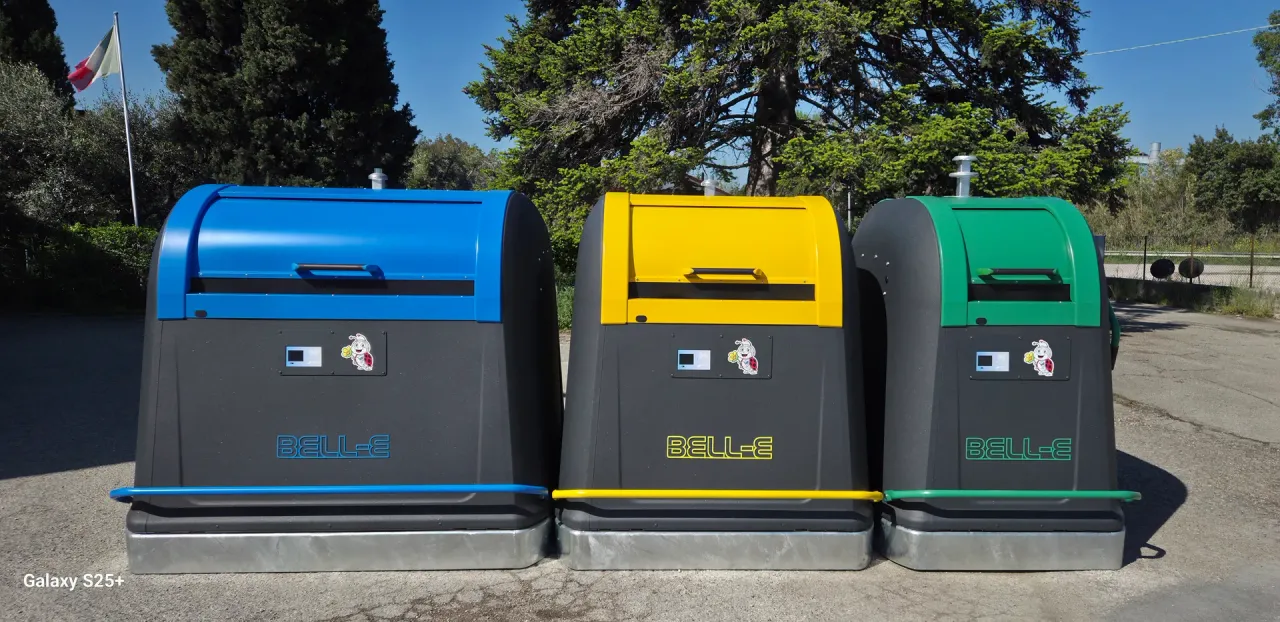
Vetroplast · Bell-e
Campane bilaterali
Vetroplast Bell-e is a hot-dip galvanised steel bilateral above-ground container for source-separated and residual waste: pyramidal geometry, UNI EN 13071 comp…
View product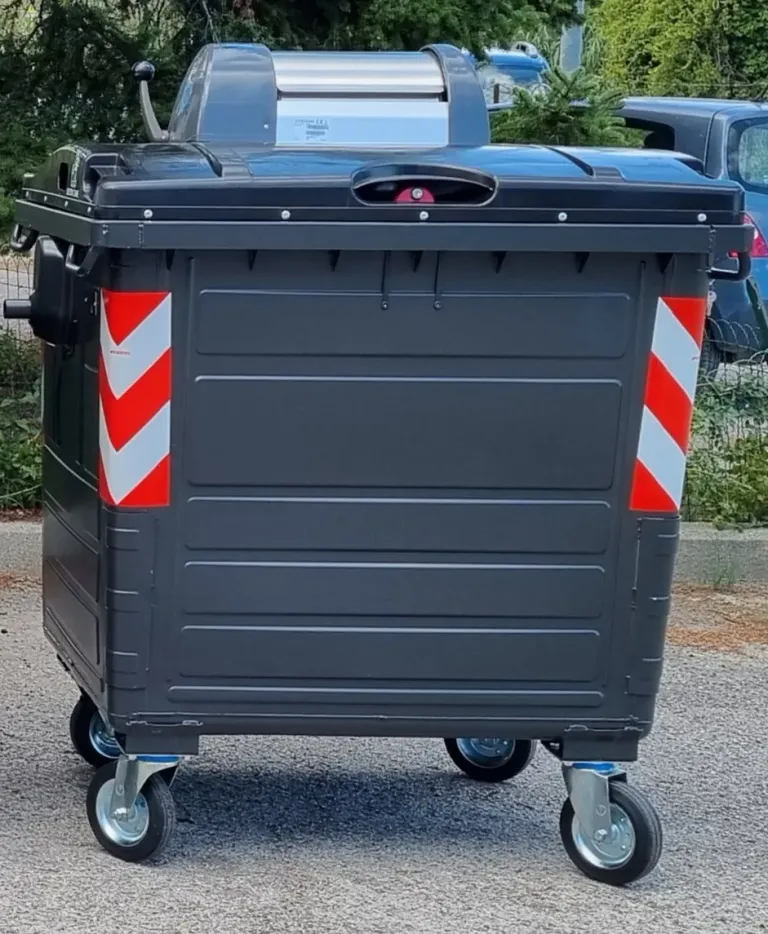
Vetroplast · Genesi
Genesi 1100
Vetroplast Genesi 1100 is a 1,100-litre hot-dip galvanised steel wheeled bin: self-supporting welded body, tapered form with rounded edges and RAL colours for…
View product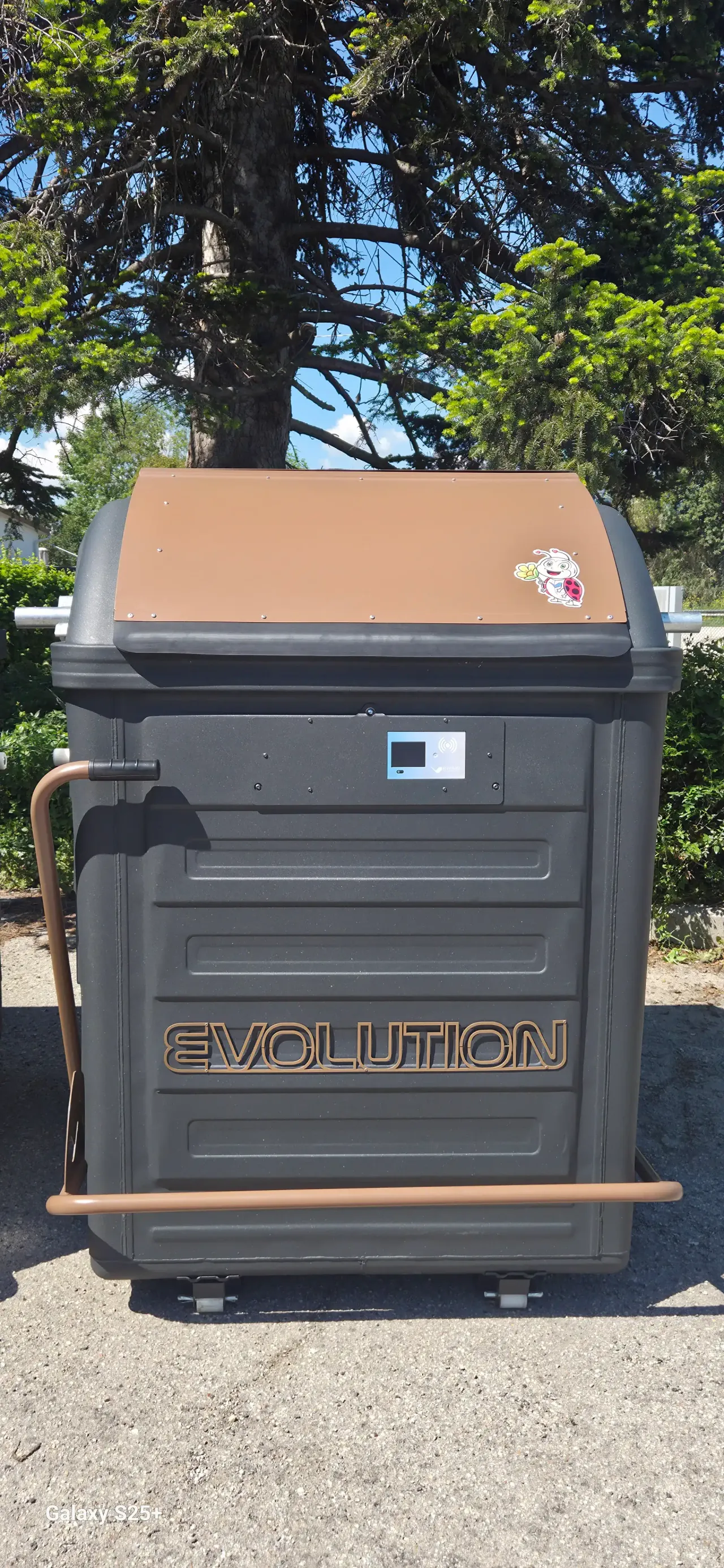
Vetroplast · Evolution
Evolution 2000
Vetroplast Evolution 2000 is a 2,000-litre above-ground bin for urban collection: mid-size capacity, streetscape integration and durable steel construction.
View product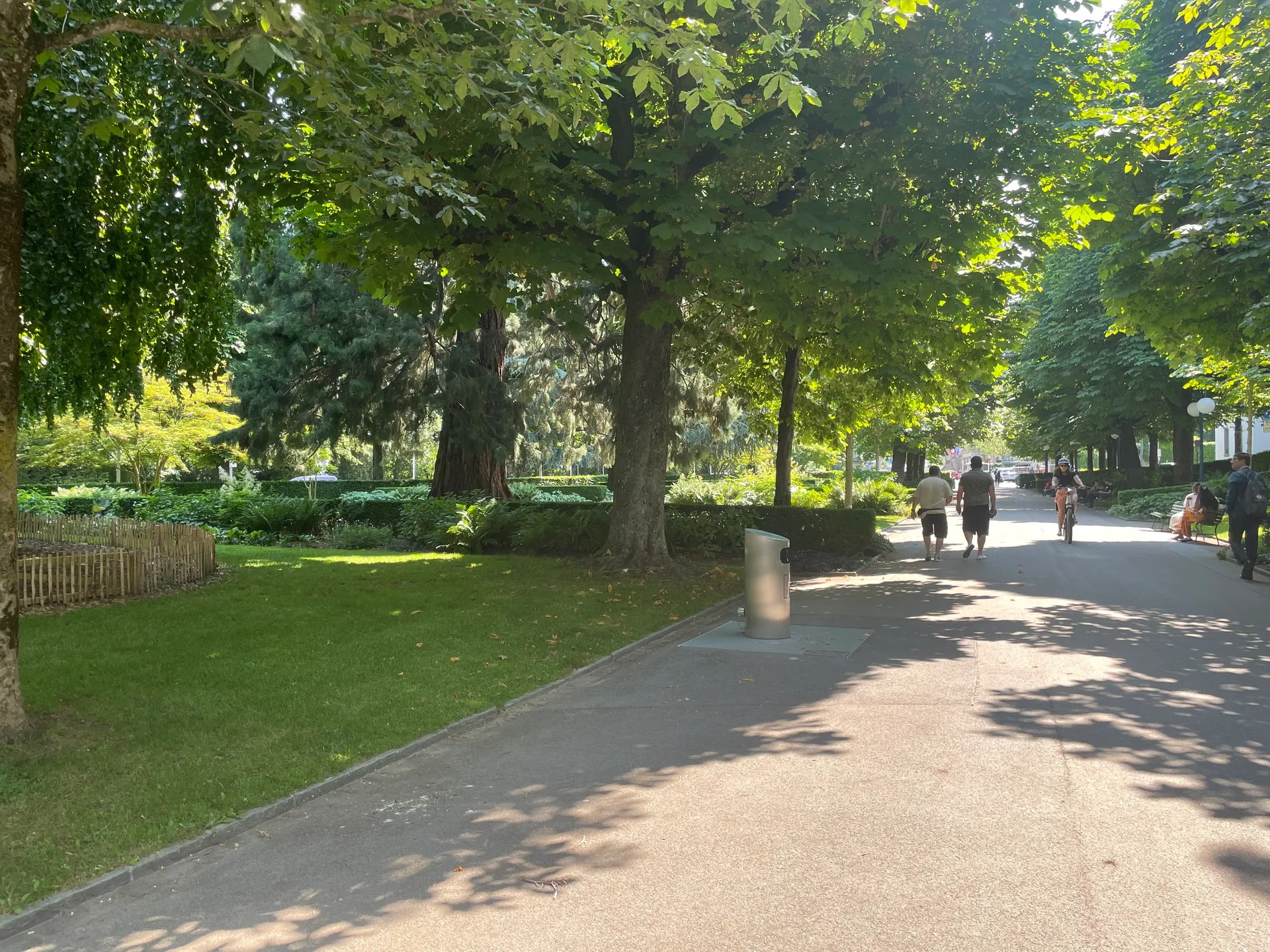
Ecollect · ECOABRI
Composite shelters for wheeled bins
ECOABRI is the Ecollect shelter range for wheeled bins with front or side exit and landscape-friendly finishes.
View product


FAQ
Answers for your project
What is the main difference between underground and semi-underground containers?
In fully underground systems the main collection volume is below ground level, while in semi-underground systems part of the structure remains above ground. The difference affects urban integration, excavation, installation and management.
Do underground containers require more excavation?
In general, a fully underground system must place a larger share of volume below level and may therefore need more significant excavation. Actual depth and complexity depend on model, ground, utilities and executive design.
When is a semi-underground system worth considering?
It is a solution to consider when the system does not need to disappear completely below road level, or when site characteristics make keeping part of the structure above ground attractive. The Bunder Waste site lists suburbs, extra-urban areas, rural and mountain zones, ports and marinas among uses.
Are underground containers suitable for historic centres?
They can be, especially when reducing visual clutter is one of the project goals. The City of Rimini has used underground eco-recycling islands in the historic centre for years to progressively replace street bins.
Can a semi-underground system have the same capacity as an underground one?
Yes, in some configurations volumes can be comparable. The Bunder Waste site offers semi-underground systems of 3 and 5 m³ and underground bells of 3, 4 and 5 m³. Comparison must still consider structure, emptying method and available space.
Which system needs less maintenance?
It cannot be stated generically. A bell with gravity emptying has a different operational structure from a hydraulic platform, while semi-underground systems can have different shell and internal container combinations. Maintenance must be assessed on the specific configuration.
Can I use my existing collection vehicles?
It is possible in some configurations, but compatibility must be verified. Platforms for 1,100 and 1,700 litre bins are associated with rear loading, while those for 2,400 and 3,200 litre stationary bins are associated with side loading. Bells require compatible lifting systems.
Does semi-underground cost less than underground?
Not necessarily. Cost depends on the whole project and may include equipment, excavation, civil works, utilities, paving, installation, technology systems and maintenance.
What should I verify before choosing between underground and semi-underground?
You should verify at least subsoil, available space, access, emptying system, contractor vehicles, required capacity, number of users, civil works, urban integration and maintenance arrangements.