
Guides and resources
Delivering an underground eco-island: a procurement checklist for municipalities and operators
Delivering an underground eco-island: information to gather, supply scope, civil works, installation and responsibilities for municipalities and operators.
Delivering an underground eco-island is not simply buying a few containers and installing them below road level. A project of this kind involves equipment, site conditions, civil works and how the collection service is run.
For a municipality or environmental operator, the phase before you request offers is therefore especially important. Collecting the right information and defining exactly what the supply must include helps you compare options fairly, benchmark proposals correctly and reduce surprises during installation.
You should start from a clear statement of needs and of who is responsible for what.
Before procurement: what information should you collect?
The first step is to reconstruct the context where the new station will be installed.
It is not enough to state how many containers you want. You need to understand what service the island must deliver and which constraints it must meet.
Before asking for a technical review, it helps to assemble five groups of information.
1. Users and waste arisings
You need the number and type of users served, distinguishing households, commercial activity, food service and hospitality. In tourist areas you should also account for seasonal variation.
2. Fractions and volumes
Identify the waste streams to collect, estimate quantities and know the planned emptying frequency. This supports island composition and the capacity required for each container.
3. Road layout and available space
Document the location with plans, photos and details of the street. Consider space for drop-off, manoeuvres and collection vehicle operations.
4. Vehicles the operator already uses
Identify available vehicles, loading systems and lifting equipment used for emptying. Fit with the existing fleet should be checked before you define the supply.
5. Site conditions
Gather what is known about the subsoil, utilities, paving and any urban planning or landscape constraints.
Solid preliminary documentation reduces the risk that critical issues surface only after equipment is ordered.
System supply, installation and civil works: three parts to separate
A critical point when delivering an underground eco-island is defining which activities the intervention includes.
Terms such as supply, installation and turnkey delivery are sometimes used together, but they do not always mean the same scope of work.
It helps to separate three components.
1. Supply of equipment
Supply covers the system used for waste collection.
Depending on the configuration it can include containers, shafts, platforms, supporting structures, drop-off towers and lifting or emptying devices.
Additional items may be required, such as access control, user identification and fill-level sensors.
The actual bill of materials should be defined in the technical datasheet for the proposed solution. Not every underground system uses the same components or the same installation approach.
2. Civil works and site preparation
Civil works are the interventions needed to prepare the space where the equipment will sit.
Depending on the project they can include:
- Excavation and material handling.
- Base preparation and any planned structures.
- Foundations and drainage where needed.
- Managing interference with utilities.
- Electrical or hydraulic connections where required.
- Reinstatement of paving and surrounding surfaces.
These tasks depend on real site conditions and the type of system chosen.
It is therefore wrong to assume civil works are automatically included in the price of underground equipment.
3. Running the collection service
The third component covers how the island works after installation.
Management includes what is needed to operate the station: user drop-off, organising emptyings, use of vehicles, operation of any electronic devices and maintenance in service.
These tasks normally sit with municipal waste services and should be treated separately from equipment supply, unless the contract expressly includes management services.
How do you define who is responsible?
A project can involve the municipality, the appointed designer, the environmental operator, the equipment supplier and the contractor doing civil works.
There is no single split of responsibility that fits every scheme. Roles should follow the subject matter of each contract and the agreements signed.
A responsibility matrix helps: for each task, who is accountable and who must provide the information.
Typical items to assign include:
- Design and preliminary site checks.
- Definition of civil work requirements.
- Supply of containers and accessories.
- Transport and handling of equipment.
- Installation and connection of components.
- Reinstatement of surfaces where applicable.
- Commissioning and handover documentation.
- Maintenance and technical support.
- Operational management of collection.
The interface between supplier and building contractor needs particular care.
For example, agree who defines excavation dimensions, who checks installation levels, who prepares the bearing course and who verifies the site is ready before equipment is delivered.
If these points stay vague, delays and extra work often follow.
What documents should you prepare before requesting a quote?
For a comparable technical and economic proposal, prepare a short project dossier.
It does not need to be final, but it should cover at least:
- Project description: municipality, location, number of stations and objectives.
- Service data: users, fractions, estimated quantities and collection frequency.
- Site documentation: plans, photos, available dimensions and utility information.
- Vehicle data: vehicle types, grip systems and emptying methods.
- Scope of supply: components required, any civil works, transport, installation and connections.
- Delivery requirements: technical documentation, functional checks, commissioning and warranty conditions.
For several stations, use a separate sheet per location. Conditions can change a lot from one drop-off point to the next.
For more on system features and clauses for technical documentation, see our guide on how to prepare a technical specification for an underground eco-island.
Handover, commissioning and management after installation
Finishing installation work should not automatically mean final acceptance of the whole intervention.
Plan checks that confirm correct installation and operation of the agreed components.
Depending on the configuration, commissioning can cover structure placement, container movement, lifting systems, safety devices and drop-off openings.
Where electronic systems are installed, verify access control, data transmission and the management platform.
At handover you should have technical sheets, use and maintenance manuals, applicable declarations and certifications, final drawings if relevant and verification records.
Future maintenance should also be agreed upfront: which parts need periodic inspection, what the operator handles and what sits with the supplier.
Technical and regulatory references (summary)
For some families of stationary underground or semi-underground containers lifted from above and emptied from below, the UNI EN 13071 series sets requirements for units up to 5 000 litres; Parts 1 and 2 do not automatically extend the same rules to every island layout.
For public-sector works, Article 41 of Legislative Decree 36/2023 refers to design levels and the need to consider urban planning, environmental, landscape and safety constraints (including Legislative Decree 81/2008 for sites and construction work).
The ministerial decree of 7 April 2025, in force from 18 June 2025, updates minimum environmental criteria (CAM) for collection and transport services and container supply. Applicability should be checked against the specific subject matter of the contract, without assuming every requirement also covers civil works alone.
From checklist to choosing an underground system
Delivering an underground eco-island therefore needs coordination between service needs, equipment features and site conditions.
For municipalities and operators, the first aim should be to define the intervention clearly before comparing bids. Supply of containers only, supply with installation and a scheme that includes civil works are different scopes of performance.
For sizing and how to design an underground eco-island, see the dedicated guide. For typologies and economic drivers without public price lists, see underground bins: how they work, cost drivers and when they make sense.
Bunder Waste supports municipalities, operators and designers in evaluating underground and semi-underground solutions, selecting and configuring systems from specialist manufacturers to match project requirements.
The range includes bell underground containers, platforms for wheeled bins and semi-underground systems. Supply and installation are defined for the required configuration and may involve specialist partners.
Explore Bunder Waste solutions for underground eco-islands or request a review starting from your project data.
Products that may fit your project
For projects like yours, many Bunder Waste customers start with these solutions. Compare capacity, use case and configurations before you get in touch for a quote.
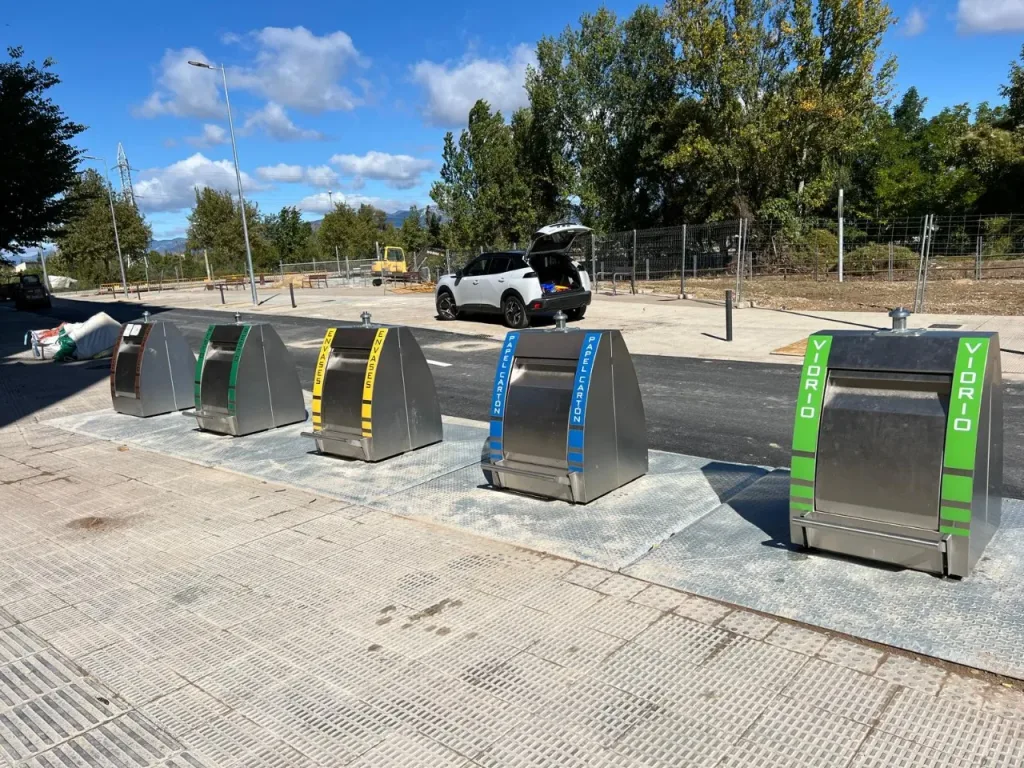
Sotkon · APTO · F90
Presa e raccolta APTO
On Sotkon APTO underground bells, the F90 coupling enables bilateral collection with a cab-controlled crane, alongside FLEX Kinshöfer and other lift options.
View product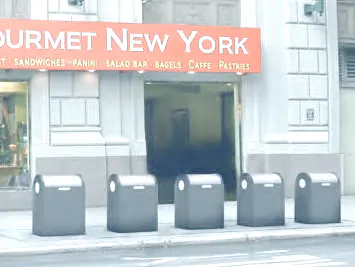
Sounete · Back
Pedane per cassonetti carrellati
Sounete Back hydraulic platforms, distributed in Italy by Bunder Company SRL, bury two to four wheeled bins: MRT chutes at street level, waste below grade and…
View product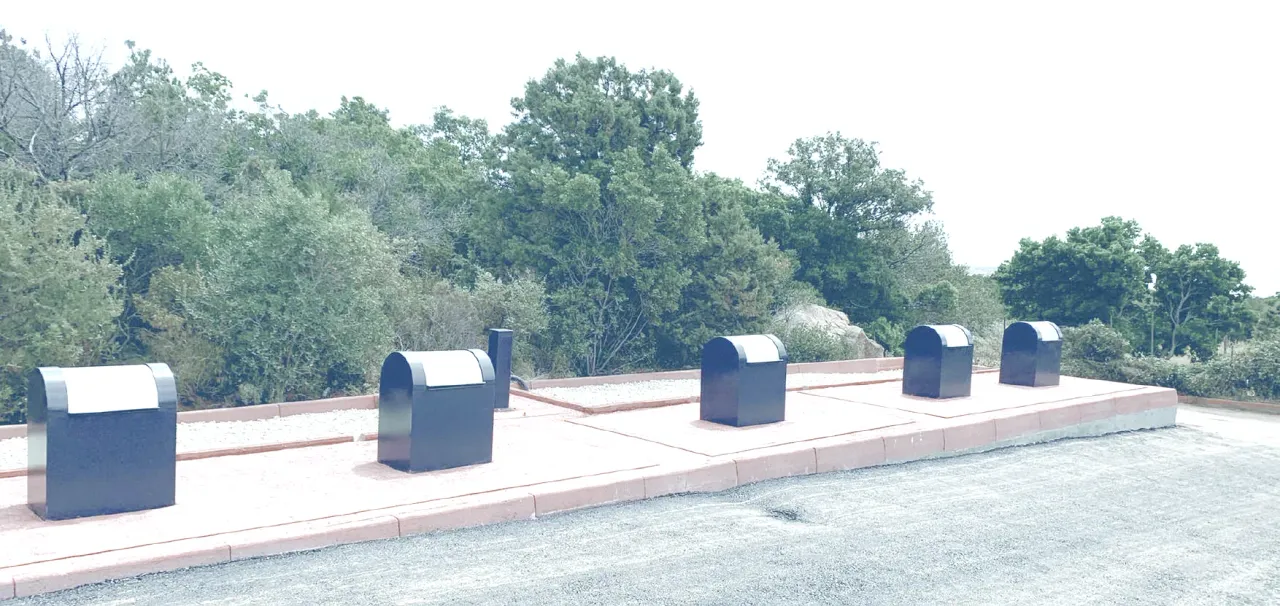
Sounete · Side
Underground systems for stationary bins
Sounete Side buries one or two 2,400 or 3,200 litre containers (up to 4,000 L in dedicated setups) in a concrete shell: scissor cover, hydraulic lift and empty…
View product

