
Guides and resources
Underground bins: how they work, what they cost and when they make sense
How underground bins work, main configurations, cost drivers and when the solution genuinely supports your collection service.
Underground bins: how they work, what they cost and when they make sense
Underground bins allow a significant amount of waste to be concentrated in a small space, leaving only elements needed for deposit and collection operations at the surface. The solution is used especially when you want to increase station capacity, reduce street clutter or integrate waste collection in contexts where urban appearance matters.
There is not a single type of underground bin, and above all there is no price that applies to every installation. Configuration must be chosen considering required volume, emptying system, vehicles already used by the contractor, access, space available for civil works and, where planned, access control and monitoring systems.
For that reason, before asking how much an underground bin costs, it is worth defining which underground system the collection service actually needs.
What underground bins are
The term “underground bins” refers to systems in which the volume for waste collection is placed mainly below road level.
At the surface there generally remain a deposit chute or inlet tower, finishing elements and, depending on technology, devices needed for lifting or access control.
The main advantage is therefore transferring a significant share of collection volume below street level.
Different configurations exist on the market. Those offered on the specialised Bunder Waste site include underground bell containers of 3, 4 and 5 m³, hydraulic platforms for 1,100 and 1,700 litre bins and platforms for 2,400 and 3,200 litre stationary containers. Configuration choice is also linked to the type of vehicle used for emptying.
This distinction matters because “underground” describes container placement, not necessarily how the service must be organised.
How an underground eco-recycling island works
Operation depends on the technology used.
In a bell configuration, the container is placed below road level and extracted from above by a lifting system on the collection vehicle. Contents are then emptied into the vehicle or equipment planned for the service.
In a hydraulic platform solution, the bin stays inside an underground structure and is brought to road level via a lifting platform during emptying.
A platform for wheeled bins can be used, for example, with 1,100 or 1,700 litre containers and rear-loading compactors. Configurations for 2,400 or 3,200 litre stationary bins are associated with side-loading collection systems.
The design principle is therefore simple:
the collection system must be compatible with the vehicle and operational methods already planned for the service.
This must be verified before defining supply.
What are the main types of underground bins?
Not all underground islands are the same. Choice can change depending on volume, collection system and street characteristics.
Underground bell containers
These are high-capacity containers, normally used when you want to concentrate large volume at one collection point.
The Bunder Waste catalogue offers configurations of 3, 4 and 5 m³. Emptying can be via loaders and press containers or through bilateral automatic systems, depending on configuration.
They are particularly relevant when the service has compatible vehicles and when volume per station is a priority.
Underground platforms for wheeled bins
In this case the bin is kept below road level and brought to the surface during emptying.
One indicated application is 1,100 or 1,700 litre bins served by rear-loading compactors. The system can be particularly useful on narrow streets and in contexts where access management makes other configurations impractical.
Underground platforms for stationary bins
Platforms for stationary bins allow larger-volume containers below road level, with Bunder Waste configurations of 2,400 or 3,200 litres indicated.
The solution is designed for side-loading collection systems and can be operated from the vehicle through dedicated systems.
From a construction point of view, one of these islands can include an external reinforced concrete shell, an electro-hydraulic platform, external tread surface, power and control system and a deposit inlet tower.
When does it make sense to choose underground bins?
The solution makes sense when the problem is not simply “hiding a bin”, but improving the overall configuration of the collection station.
A typical case is a historic centre where surface space is limited and multiple above-ground bins create clutter and poor integration with urban space.
Another case is an area where the contractor must increase collection capacity without proportionally multiplying visible containers.
The Bunder Waste site indicates underground bells particularly for urban and semi-urban areas, platforms for wheeled bins for narrow streets and historic centres, and platforms for stationary bins on easier-flow streets.
Choice should nevertheless not be based on geography alone. Collection vehicle, lifting system, emptying frequency and site characteristics must also be verified.
What advantages do they offer compared with above-ground bins?
The first advantage is the possibility of greater collection capacity while occupying less visible surface space.
This can have different operational and urban planning consequences depending on the project.
Greater capacity concentrated at one station
An underground station can collect large volumes while keeping a reduced number of elements at the surface.
This can help when deposited quantities are high or when you want to reduce the number of containers along a street.
Lower visual impact
The bulkiest part of the system is below road level.
What remains visible is mainly the inlet tower or deposit chute, which can be designed to integrate with the surroundings.
This is particularly relevant in squares, historic centres, tourist areas and other contexts where public space quality is an important project component.
Recovering surface space
Reducing container clutter can free space for other uses, including parking and pedestrian routes, when urban planning allows.
Collection management
Greater volume per point can allow emptying frequency to be reviewed.
That does not automatically mean an underground island reduces service costs in every situation. The result depends on waste quantities, fill frequency, distance to the deposit point, vehicles used and round organisation.
Assessment should be on the overall service.
How much do underground bins cost?
This is one of the most frequent questions and one of the hardest to answer with a single figure.
There is no standard price for an underground eco-recycling island.
Cost depends on the technology chosen and what must be included in the supply.
In particular, you should distinguish at least between:
- container supply only;
- complete system with underground structure;
- platform or lifting system;
- inlet tower and deposit components;
- civil works;
- excavation and earth movement;
- water management if applicable;
- paving reinstatement;
- access control systems;
- sensors;
- software;
- transport;
- installation;
- commissioning;
- maintenance and support.
This distinction is essential when comparing two quotes.
An offer that includes only equipment is not directly comparable with supply that also includes civil works, installation, electronic systems and paving reinstatement.
A concrete example of how cost is built
Documentation for an AMIU Puglia tender published in 2025 for supply and installation of underground eco-recycling islands in Bari provided separately a technical data sheet for containers, a price list and a bill of quantities. The tender base amount was €975,106.28, with award at €924,833.61. The tender covered not only containers but supply and installation of the intervention foreseen by the project.
The related technical sheet provided for 14 underground containers/eco-recycling islands, user identification systems, container monitoring and an integrated IT system, plus technical assistance, operational support and maintenance.
This example shows why it would be wrong simply to divide the total amount by the number of islands and call it “the price of an underground bin”: the amount included different components, installation and services.
Civil works can also significantly affect overall cost. The price list associated with the same design includes, among other items, possible interference with utilities, excavation, backfill, transport and disposal of spoil, sub-base works and paving reinstatement.
For a serious economic assessment, the quote should therefore start from site configuration and collection system, not container volume alone.
What does the cost of an underground eco-recycling island depend on?
System type
An underground bell and a hydraulic platform for bins have different components and installation methods.
Even within the same category there can be different configurations.
Number and volume of containers
A station with a single container does not cost the same as an island with several containers for different separate-collection fractions.
In a real project containers of different volumes may be needed depending on waste flow.
The AMIU Puglia 2025 tender, for example, provided islands with five containers, with volumes of 5,000 litres for paper, mixed recyclables and non-recyclable waste and 3,000 litres for organics and glass.
Civil works
These are among the elements most easily underestimated in a first assessment.
Before installation the following may be needed:
- excavation;
- base preparation;
- containment structure;
- water management;
- material handling;
- possible utility interference;
- paving reinstatement.
Their weight depends on actual site characteristics.
Existing paving
Installing a solution in a new area is not the same as intervening on a paved square, a natural stone street or a surface that must be demolished and reinstated.
Paving type can therefore affect works required.
Emptying system
Compatibility with the collection vehicle is a design requirement but can also influence economic configuration.
The system must be compatible with lifting type and the contractor’s operational methods.
Electronics and access control
When the island is digitised, cost is not only the device on the deposit opening.
The following may be involved:
- user identification;
- access control;
- deposit recording;
- sensors;
- data transmission;
- software;
- user management;
- support;
- maintenance.
A PNRR project on Bari’s underground islands, for example, required an integrated IT system to record deposits, monitor the container fleet and support service analysis and optimisation.
Cost should be assessed together with the collection service
For a municipality or environmental contractor, purchase price should not be the only economic parameter.
A more useful assessment considers the relationship between investment and service operation.
For example, a high-capacity station can concentrate more deposits at one point. If that changes emptying frequency or round configuration, the economic effect must be assessed on the overall service.
ISPRA, in the 2025 Urban Waste Report, analyses costs of separate collection distinguishing, among others, collection and transport costs from treatment and recycling costs. This confirms the importance of treating collection as a component of overall system cost, rather than assessing the single container in isolation.
It is therefore not correct to state that an underground system is automatically cheaper than a traditional one.
The right question is:
which configuration delivers the required service with the best balance between investment, operation, available space and collection methods?
How to choose the right underground system
The first step is to start from the existing service.
1. Which vehicle performs emptying?
This is one of the first pieces of information to verify.
If the contractor mainly uses rear-loading compactors, a configuration with a platform for rear-loaded wheeled bins may be more consistent.
If the service uses side-loading systems, configurations for stationary bins can be assessed.
For underground bells you must verify loader type and available lifting system.
The Bunder Waste site distinguishes configurations precisely by collection methods.
2. How much waste must be collected?
Capacity should not be chosen on nominal volume alone.
You should consider:
- population served;
- user types;
- fractions collected;
- expected output;
- emptying frequency;
- seasonality;
- commercial or hospitality activity;
- user behaviour.
A tourist municipality, for example, can have very different deposit patterns between low and high season.
3. How much space is available?
Both surface space and space needed below road level must be verified.
For underground solutions you should also assess structure dimensions, vehicle accessibility and space needed for emptying operations.
4. What are subsoil conditions?
Before designing excavation you need to know utility presence and ground characteristics.
AMIU Puglia tender documentation, for example, included a specific item for possible relocation or removal of existing utilities and various excavation and spoil management works.
This is one reason cost cannot be determined seriously from container capacity alone.
5. What level of digitisation is needed?
An underground system can also be used without complex IT management.
When the project requires user identification, access control, deposit recording or fill monitoring, the electronic and IT component must also be designed.
In the Bari case, technical documentation provided controlled access, identification via RFID and/or smartphone, deposit data management and communication with the administration’s IT systems.
Underground containers and smart systems
Burying the container and digitising collection are two distinct aspects.
An island can be designed mainly to improve space and volume management.
In other cases it can be integrated with:
- access control;
- user identification;
- fill-level monitoring;
- data management;
- support for pay-as-you-throw charging.
The Bunder Waste site offers hardware and software for access control and fill-level monitoring on its underground, semi-underground and above-ground configurations.
Technology should however be introduced when it meets a concrete service need.
Adding electronics without defining the operational model first can increase complexity and cost without a proportionate benefit.
What are the main mistakes in selection?
Choosing the container before the vehicle
This is one of the most significant errors.
The emptying system must be compatible with equipment used by the contractor. Verification should be in the design phase, not after purchase.
Considering only volume
A larger container is not automatically the best solution.
If the position is not easily reachable by the vehicle or the lifting system is incompatible, greater capacity does not solve the operational problem.
Ignoring civil works
Container cost is only part of the intervention.
Excavation, utilities, water management, paving and reinstatement can change the economic picture significantly.
Comparing non-like quotes
Before comparing two offers you must verify what they include.
A “container” supply is not equivalent to a turnkey supply including structure, installation, ancillary works and electronic systems.
Adding technology without defining the process
Access control and monitoring are management tools.
First establish what you want to achieve, what data you need and who will use them.
When to assess an underground solution instead of a semi-underground one?
The choice does not depend on aesthetics alone.
Semi-underground containers are a distinct category in which a significant share of volume remains below ground level but external configuration and required works may differ.
The Bunder Waste site offers, for example, semi-underground containers with polyethylene shells and internal bag, polyethylene or steel containers, with stated capacities from 1,200 up to 5,000 litres, as well as configurations with concrete shells and internal steel containers of 3,000 or 5,000 litres.
Assessment should therefore start from site conditions and service objectives:
- available depth;
- space;
- collection type;
- emptying frequency;
- vehicle used;
- desired visual impact;
- civil works;
- overall costs.
In some projects a semi-underground solution may align better with available conditions; in others, full burial may better meet project goals.
How to prepare a correct quote request
To obtain a truly comparable offer it is useful to give the supplier as much information as possible.
A technical request should indicate at least:
- municipality and location of the intervention;
- number of planned stations;
- waste fractions to collect;
- quantities or estimate of deposits;
- current emptying frequency;
- type and model of available vehicles;
- lifting system used;
- desired volume or number of users served;
- characteristics of existing surface;
- any urban or architectural constraints;
- known utility presence;
- access control needs;
- fill monitoring if required;
- works to be included in supply;
- maintenance and support if required.
The more precise this information, the more you can compare genuinely equivalent configurations.
Sound assessment starts from the project, not the bin price
Underground bins can solve very different problems: from reducing clutter in a historic centre to increasing station capacity, through to building a digitised system for separate collection.
Cost must therefore be assessed together with technical configuration.
A well-sized solution must relate volume, users, access, collection vehicle, emptying method, civil works and future management.
When requesting an offer, the more useful question is not simply “how much does an underground bin cost?”, but:
Which underground configuration is compatible with my collection service and what investment does the complete intervention require?
That is the basis for comparing alternatives correctly.
To explore available configurations, see the section on underground eco-recycling islands and pages dedicated to individual systems on the Bunder Waste site.
Products that may fit your project
For projects like yours, many Bunder Waste customers start with these solutions. Compare capacity, use case and configurations before you get in touch for a quote.
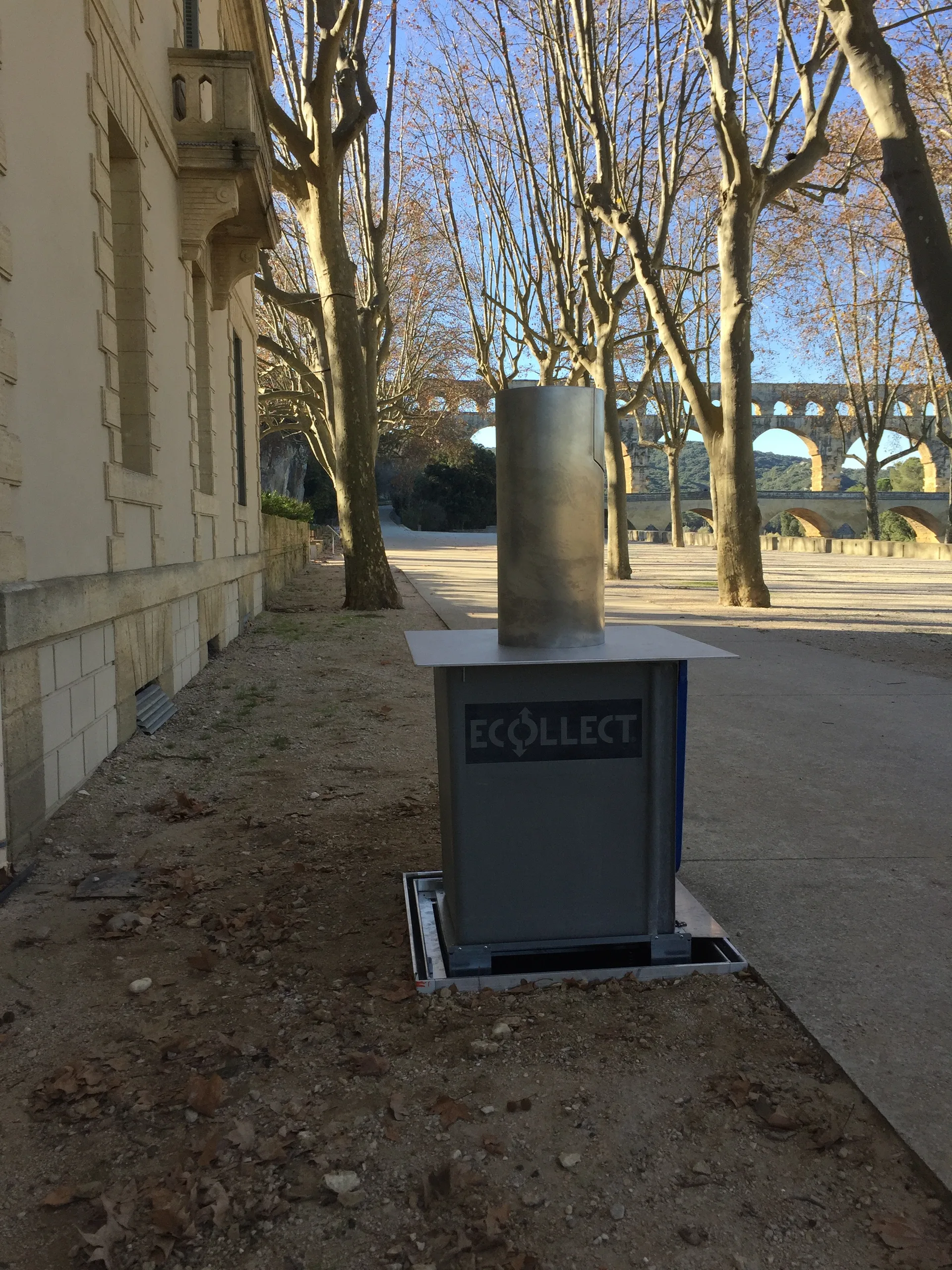
Ecollect · ECOBAC · 360
High-capacity 360 L semi-underground unit
ECOBAC 360 is a high-capacity street bin with most volume below grade.
View product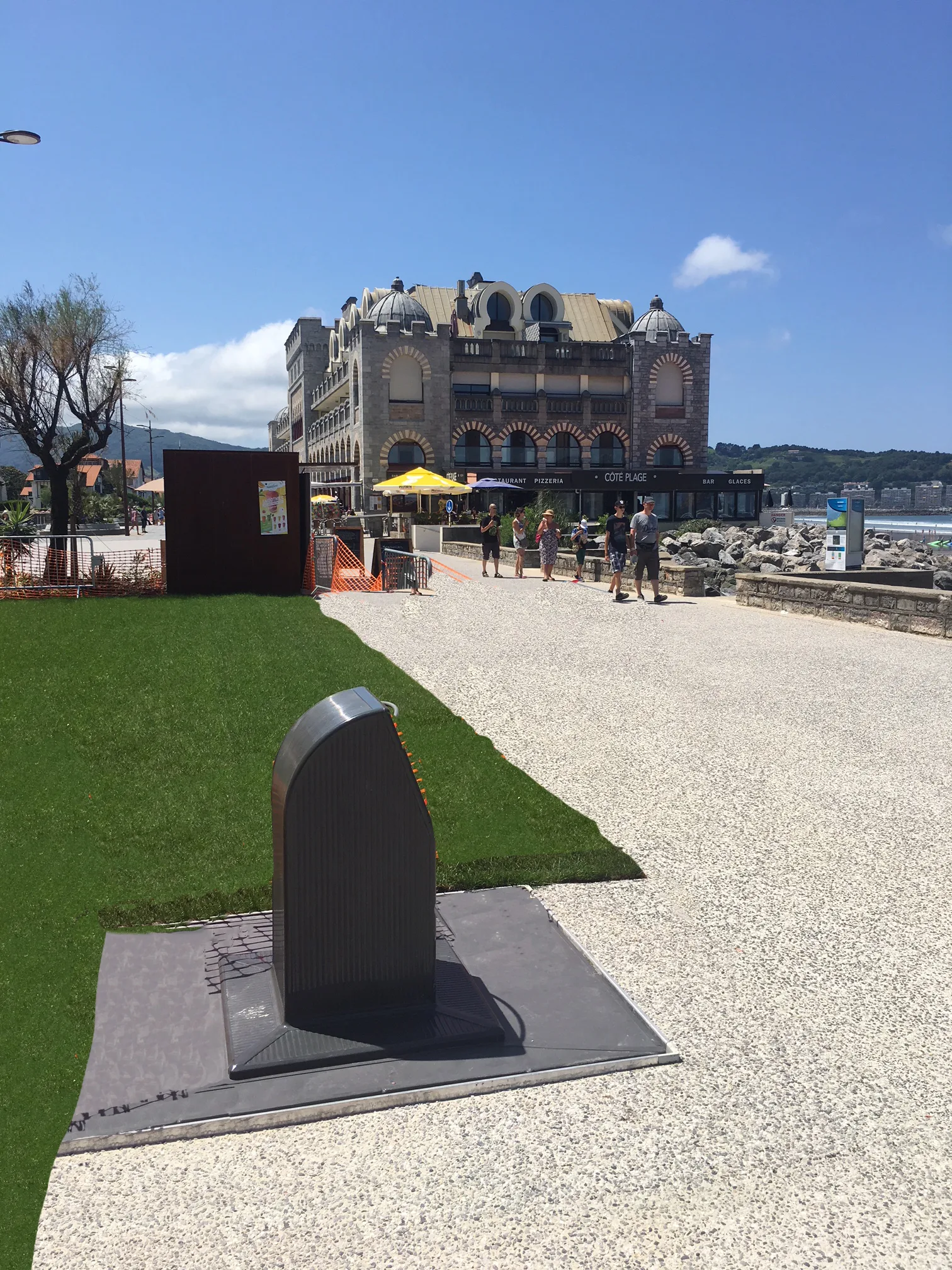
Ecollect · ECOBAC · 750
Semi-underground vault for 750 L wheeled bins
ECOBAC 750 hosts a 750 L wheeled bin in steel or concrete vault depending on flood risk.
View product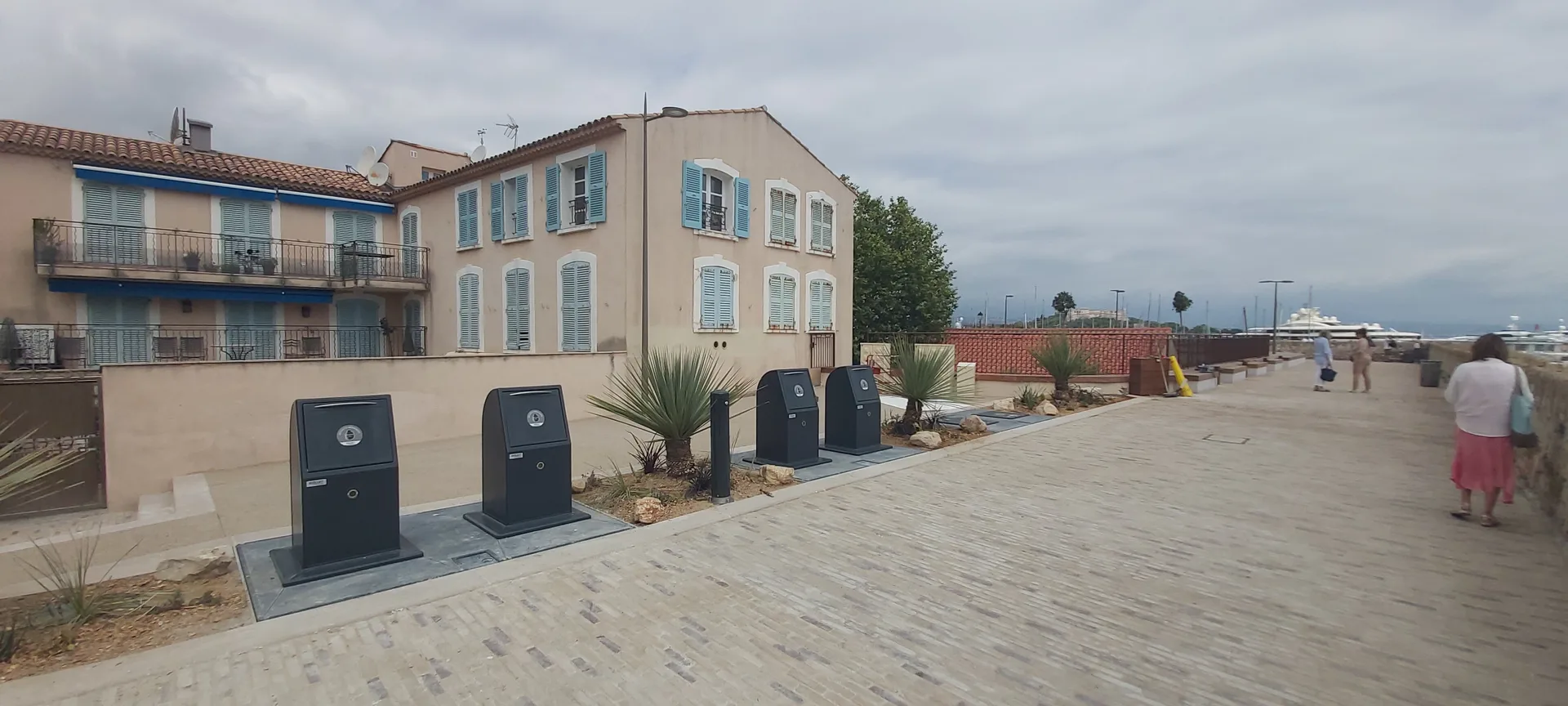
Ecollect · ECOBAC · 1500
Multi-bin semi-underground system up to 1,500 L
ECOBAC 1500 groups several wheeled bins in one semi-underground vault for up to 1,500 L total.
View product
FAQ
Answers for your project
How much does an underground bin cost?
There is no single price. Cost depends on container type, capacity, emptying system, civil works, installation and any electronic systems. A correct economic request must refer to the complete configuration of the intervention.
How much can an underground bin hold?
It depends on technology. Configurations on the Bunder Waste site include underground bell containers of 3, 4 and 5 m³, plus systems with platforms for 1,100, 1,700, 2,400 and 3,200 litre bins.
Can underground bins be used for separate collection?
Yes. Different configurations can serve different separate-collection fractions. Volume and number of containers must be sized for expected flows.
Which vehicle is needed to empty an underground bin?
It depends on the system. Underground bells may require vehicles with dedicated lifting and hoisting systems, while platforms can be configured for bins served by rear- or side-loading compactors.
Are underground bins suitable for historic centres?
They can be particularly relevant in historic centres when space, access and urban appearance make numerous above-ground containers problematic. Configuration must still be verified against street and vehicle characteristics.
Is it possible to control who uses an underground bin?
Yes, when the system has access control. Configurations are available that identify users and manage deposits through electronic systems.
Is it possible to monitor fill level?
Yes, when the container is equipped with sensors and management systems foreseen by the specific configuration. Monitoring can support emptying organisation.
Does an underground island automatically reduce collection costs?
No. It can help change service management, for example through greater capacity per station, but the economic effect depends on emptying frequency, quantities collected, distance, vehicles, staff and round organisation.
How much space is needed to install an underground island?
It depends on model and number of containers. Both underground structure dimensions and space the vehicle needs to reach the station and empty must be considered.
What must be verified before installing an underground bin?
You should verify at least available space, depth, utilities, ground characteristics, paving, vehicle access, lifting system, emptying method and safety requirements.