Condominium eco-islands: solutions for separate waste collection

How to organise a collection point for condominiums and residential complexes, weighing underground containers, available space, drop-off and operating needs.

An organised collection point for the building

A condominium eco-island is an area for waste from the households of a building or residential complex. Layout depends on space, fractions, number of households and the collection service.

The term is not a municipal civic amenity site. It can mean a group of underground bells, platforms for bins, or another layout agreed with the operator.

A useful layout is assessed together: how residents drop waste, where containers sit, and how the vehicle empties them.

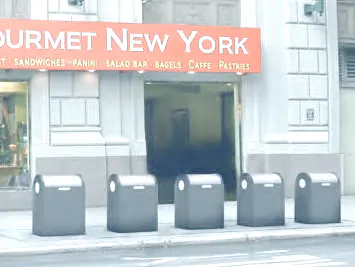
Sotkon APTO underground bell containers in a green area.

Systems for condominium separate collection

No single layout fits every building. The system depends on fractions, space and the vehicles that empty the containers.

The choice depends on the building

Four typical situations, to recognise your own case. They are not projects delivered by Bunder.

  • Sotkon APTO underground bells, visual reference for a new complex.

    New-build condominiums

    The collection point can be drawn into outdoor and common areas from the start, together with emptying needs and any required works.

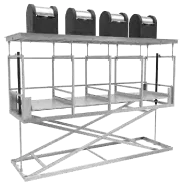
  • Sounete platforms, visual reference for a larger complex.

    Residential complexes with many households

    Sizing considers users, fractions, expected quantities and emptying frequency. Figures come from the operator or the designer, not from a single rule.

  • Sotkon APTO system, visual reference for a refurbishment.

    Condominiums being refurbished

    Reorganising the collection point is assessed with work on outdoor areas, after the site conditions have been checked.

  • Sounete Side platform, visual reference for limited outdoor space.

    Condominiums with limited outdoor space

    Footprints, access and manoeuvring areas need measuring. An underground installation is not always feasible: subsoil, utilities and works can rule it out.

How to organise a condominium eco-island

Three examples to show the reasoning. They do not describe a site or a client.

  1. Smaller condominium

    A shared drop-off point is needed. The system follows households and the site. A container count is not fixed in advance.

    Check fractions, resident routes, vehicle access and whether excavation is feasible.

    Illustrative scenario, not a documented installation.

    Review Sotkon APTO bells

  2. Residential complex with several buildings

    Collection points may be concentrated or spread out. The choice follows households, space and how the service is organised. One central node is not always preferable.

    Check walking distances, which vehicles enter the complex, and fractions that must stay separate.

    Illustrative scenario, not a documented installation.

    Review Sounete Back platforms

  3. New residential scheme with underground collection

    The collection system is part of the outdoor design: access, utilities, works and emptying method are set before construction.

    Align designer, operator and emptying method before choosing bells or platforms.

    Illustrative scenario, not a documented installation.

    Review Sounete Side platforms

What to check before installing a condominium eco-island

An operational overview. Design detail stays in the dedicated guides.

  1. 1. Households and waste

    Identify the households served, the fractions and how drop-off is organised.

  2. 2. Available space

    Assess footprints, access, pedestrian routes and usable common areas.

  3. 3. Subsoil and works

    An underground system needs site conditions, utilities, installation space and civil works. There is no prescription that fits every condominium.

  4. 4. Compatibility with the collection service

    Check how containers are emptied and whether the operator's vehicles match the chosen system.

  5. 5. Day-to-day use and maintenance

    Consider drop-off, access, cleaning, inspection and maintenance.

Drop-off management and access control

User identification, access control, fill-level readings and drop-off data depend on the technologies installed, not on choosing an underground system as such.

On the Sotkon APTO line, Sotkis integration (RFID access control, fill level and PAYT) is available on request. On Sounete Back, access control is listed as an option. The Sounete Side page does not document these functions.

Read about access control and digital eco-islands

Go further on systems and design

Links to pages already published, for a more developed project.

Frequently asked questions

Frequently asked questions on condominium eco-islands

It is an area for separate collection from the households of a building or residential complex. Layouts differ, and it is not a municipal civic amenity site.

No. Space, subsoil, works, access and compatibility with the collection service must be checked. Not every site is suitable.

Cost depends on the system, the number of containers, civil works, site conditions and the installation. Prices are not published on this site: they are quoted on request.

Consider the number and type of households, waste produced, fractions collected and emptying frequency. There is no single formula for every condominium.

Only when the chosen solution has compatible technology. On Sotkon APTO, Sotkis can be added on request. On Sounete Back, access control is an option. It is not standard on every system.

The check may involve the professionals appointed for the project, the collection operator and other competent parties, according to the scheme and the rules that apply. It is not the same duty in every condominium.

Assessing an eco-island for your condominium?

The collection system depends on the building, the households served and how the operator works. Bunder Company distributes underground collection systems in Italy and helps assess which systems fit the project.