
Guides and resources
Urban decor: eco-islands that free public space
For contracting officers and designers: concentrate capacity and streams at a few well-finished points aligned with paving and street furniture.
At a glance
Streetscape quality improves when waste no longer competes with pedestrians and shopfronts: burial, semi-underground volumes or designed enclosures hide capacity while keeping sorting.
The choice depends on required capacity, emptying methods and whether the island must sit flush with the pavement or may use dedicated street furniture.
A discreet or harmonised island is not only aesthetics: it reduces littering, simplifies street cleaning and makes fraction deposit points easier to read.
The perceived problem
Multiple bins, temporary sacks and messy drop-off zones erode place quality and trigger complaints from retailers and residents.
In regeneration projects, collection should be planned with surfacing, lighting and furniture, not added as an afterthought.
Squares and shopfronts suffer most when collection steals parking bays, blocks footways or leaves bins out outside service hours.
Even good design fails if the operator cannot empty at the planned frequency: overflow brings sacks and temporary bins back into view.
Aesthetic and functional criteria
Balance number of streams, useful volume and emptying frequency: fewer above-ground elements often means fewer, higher-capacity islands.
Use manufacturer finishes and colours that match the municipal street furniture specification.
Check accessibility, chute operation and paths for users with reduced mobility from the island layout stage.
Set a maximum plan footprint for the island (including open lids) and compare it with usable footway width.
Plan integrated lighting and signage without adding poles or boards that clash with the rest of the street.
Visible footprint vs real capacity
Shrinking the surface footprint moves volume underground, semi-underground or into bilateral bells; sizing must still cover weekend and event peaks.
Sounete platforms with bins below grade free the view but need excavation space and vehicle access to the platform.
Bell-e and Vetroplast above-ground lines keep a contained architectural profile versus rows of standard bins, with top loading where the fleet allows.
Ecoabri and Secomat do not add capacity: they screen what stays on the surface and need clear rules on placement and hours.
Approaches by context
Maximum discretion: Sotkon APTO underground bells or Sounete Back and Side platforms with MRT chutes and bins below grade.
Curated above-ground: Vetroplast Bell-e bilateral top-loading bells, or Evolution, Genesi and Euro bins with coordinated enclosures.
Screening: Ecoabri covers or Secomat enclosures where wheeled bins or technical units must stay on show but hidden.
In premium residential streets, a main underground island plus proximity underground litter bins often avoids long rows of coloured containers.
Integration with urban design
Place the island in paving design (levels, gullies, kerbs) to avoid standing water around chutes and lids.
Coordinate RAL colours or finishes with benches, planters and railings already in the specification: perceived cleanliness depends on the whole ensemble.
Plan construction to limit long footway closures in front of shops.
After installation, check the island does not create blind spots and that fraction signage stays readable at night.
Communication for users and retailers
Explain to residents why the island replaces scattered bins and where each stream goes after opening.
Involve the traders’ association for construction hours and impact on reserved parking.
Provide information at town hall or kiosks for tourists unfamiliar with the new layout.
Collect feedback in the first 60 days via a dedicated channel to adjust signage or hours.
Avoid purely technical messages: users judge streetscape quality partly by how clear instructions are, not only by finishes.
Service and upkeep
Clean design must stay clean in operation: plan vehicle access, chute cleaning and wear-part replacement in the maintenance specification.
Match emptying to the fleet to avoid full islands that force temporary visible containers.
Set pressure-wash or seal maintenance intervals for islands in heavy tourism flows.
Track odour and litter complaints: they often signal insufficient frequency or mis-sorting more than a design flaw.
Tender-stage checks
Request renders or scale mock-ups of island profile against footway and shopfronts.
Verify proposed solutions can be emptied with contract or planned fleet equipment.
Check accessories and finishes are documented and replaceable, not one-off pieces.
For technical specifications and detailed dimensions: info@bunder.it with layout and stream count.
Products to review
Sotkon APTO underground bells, Sounete Back and Side recessed platforms, Vetroplast Bell-e bilateral bells (complementary systems family), Vetroplast Genesi 1100 and Evolution 2000, Ecoabri covers, Secomat container screening.
For low pedestrian footprint in constrained settings, compare the historic centre collection guide.
Operational steps for municipality and operator
Appoint a single lead across technical office, operator and traders for island aesthetics.
Request finish samples and compare with existing street furniture before ordering.
Write chute cleaning and removal of non-compliant deposits into the service contract.
Schedule quarterly inspections with photos on the same route to track visual decline.
After one year, decide whether extra nodes are needed or only higher frequency on existing islands.
For emptying modes on curated above-ground solutions, align the specification with the vehicle compatibility guide.
Products that may fit your project
For projects like yours, many Bunder Waste customers start with these solutions. Compare capacity, use case and configurations before you get in touch for a quote.
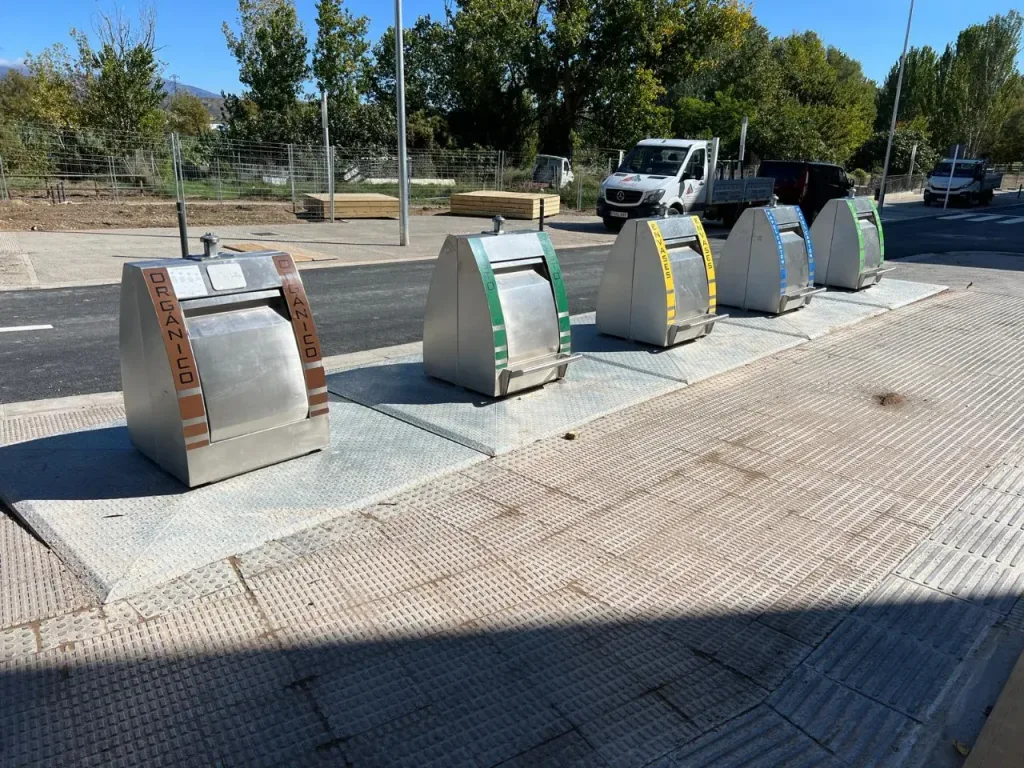
Sotkon · APTO
Underground bell-shaped containers
Sotkon’s APTO system, distributed in Italy by Bunder Company SRL under Bunder Waste, holds 3 to 5 m³ below grade with a monolithic shell, hot-dip galvanised st…
View product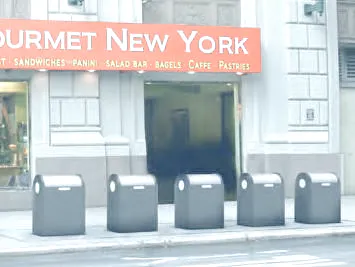
Sounete · Back
Pedane per cassonetti carrellati
Sounete Back hydraulic platforms, distributed in Italy by Bunder Company SRL, bury two to four wheeled bins: MRT chutes at street level, waste below grade and…
View product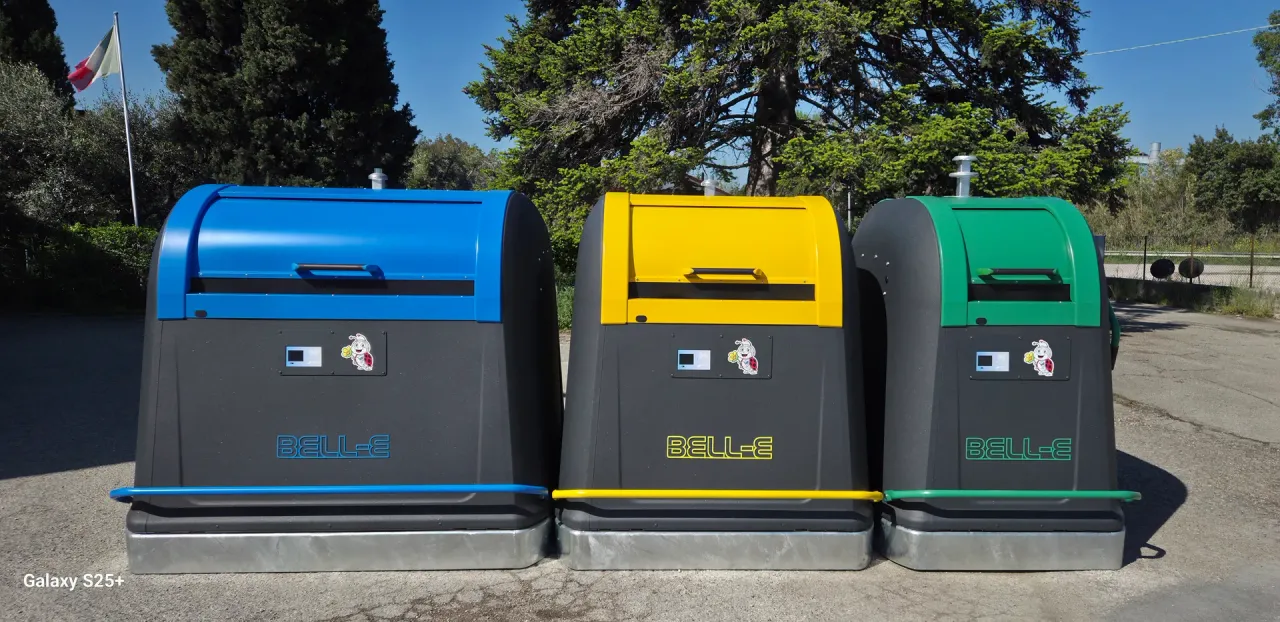
Vetroplast · Bell-e
Campane bilaterali
Vetroplast Bell-e is a hot-dip galvanised steel bilateral above-ground container for source-separated and residual waste: pyramidal geometry, UNI EN 13071 comp…
View product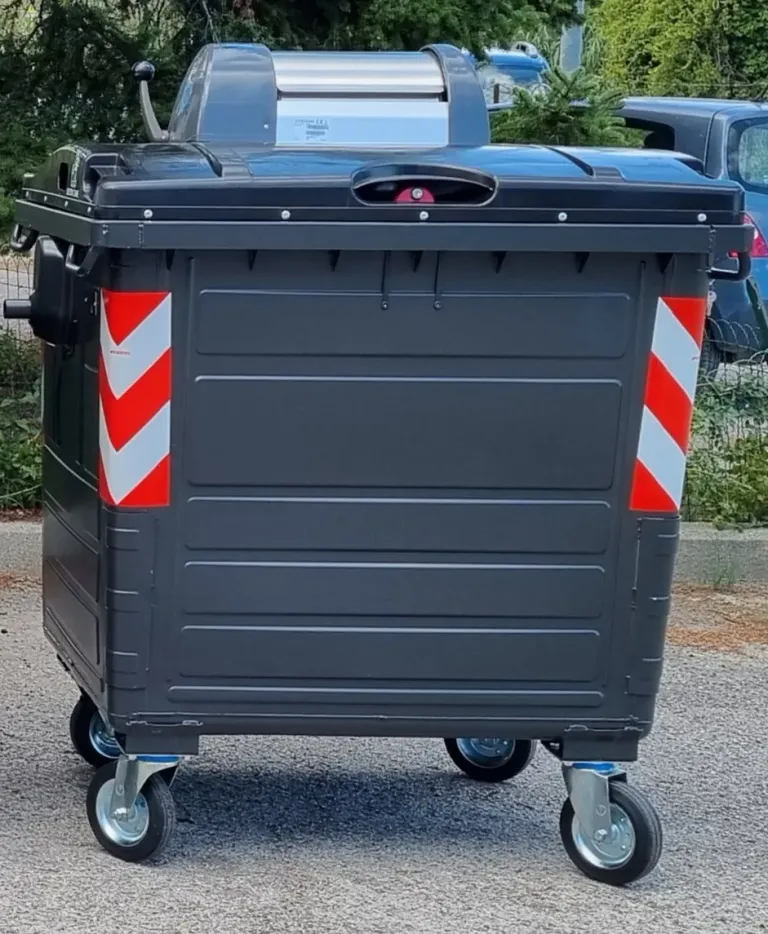
Vetroplast · Genesi
Genesi 1100
Vetroplast Genesi 1100 is a 1,100-litre hot-dip galvanised steel wheeled bin: self-supporting welded body, tapered form with rounded edges and RAL colours for…
View product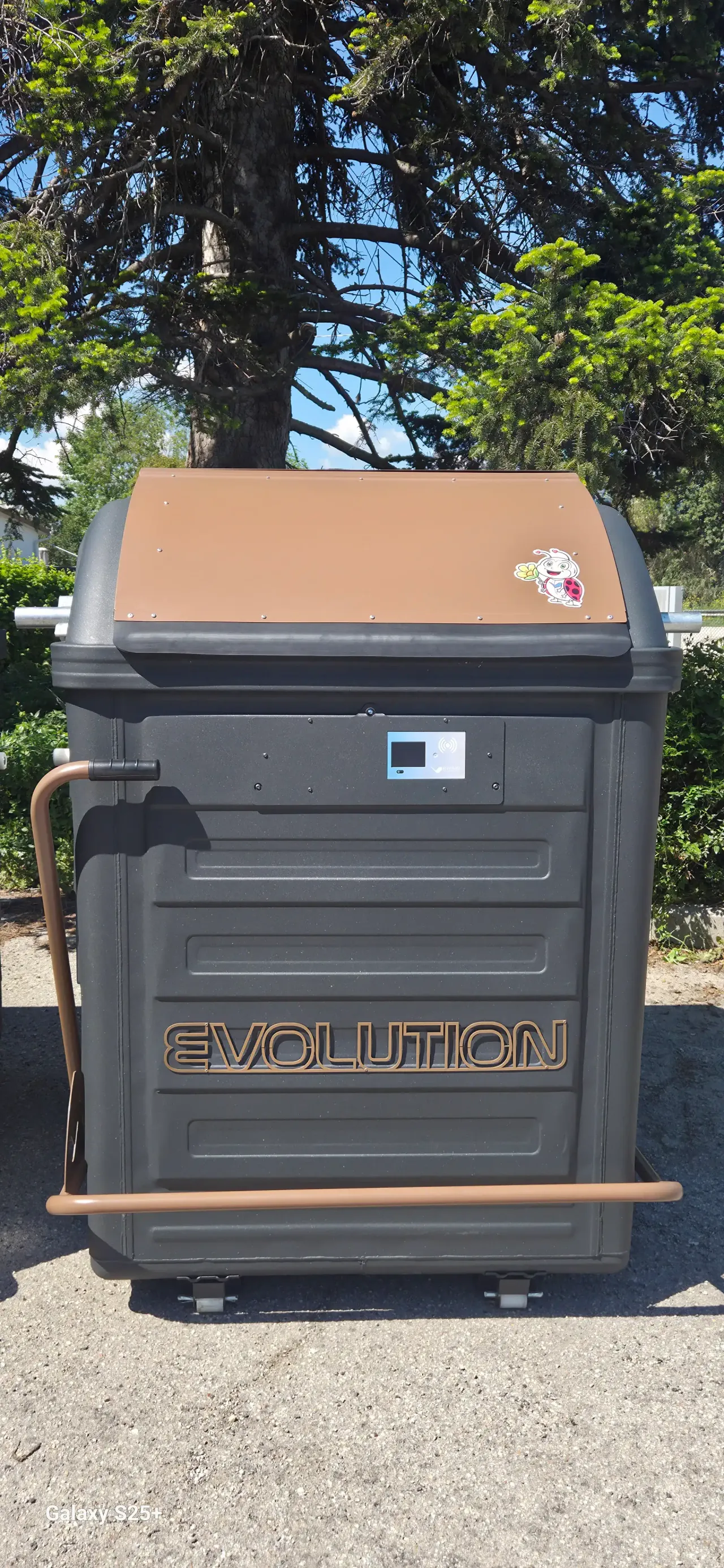
Vetroplast · Evolution
Evolution 2000
Vetroplast Evolution 2000 is a 2,000-litre above-ground bin for urban collection: mid-size capacity, streetscape integration and durable steel construction.
View product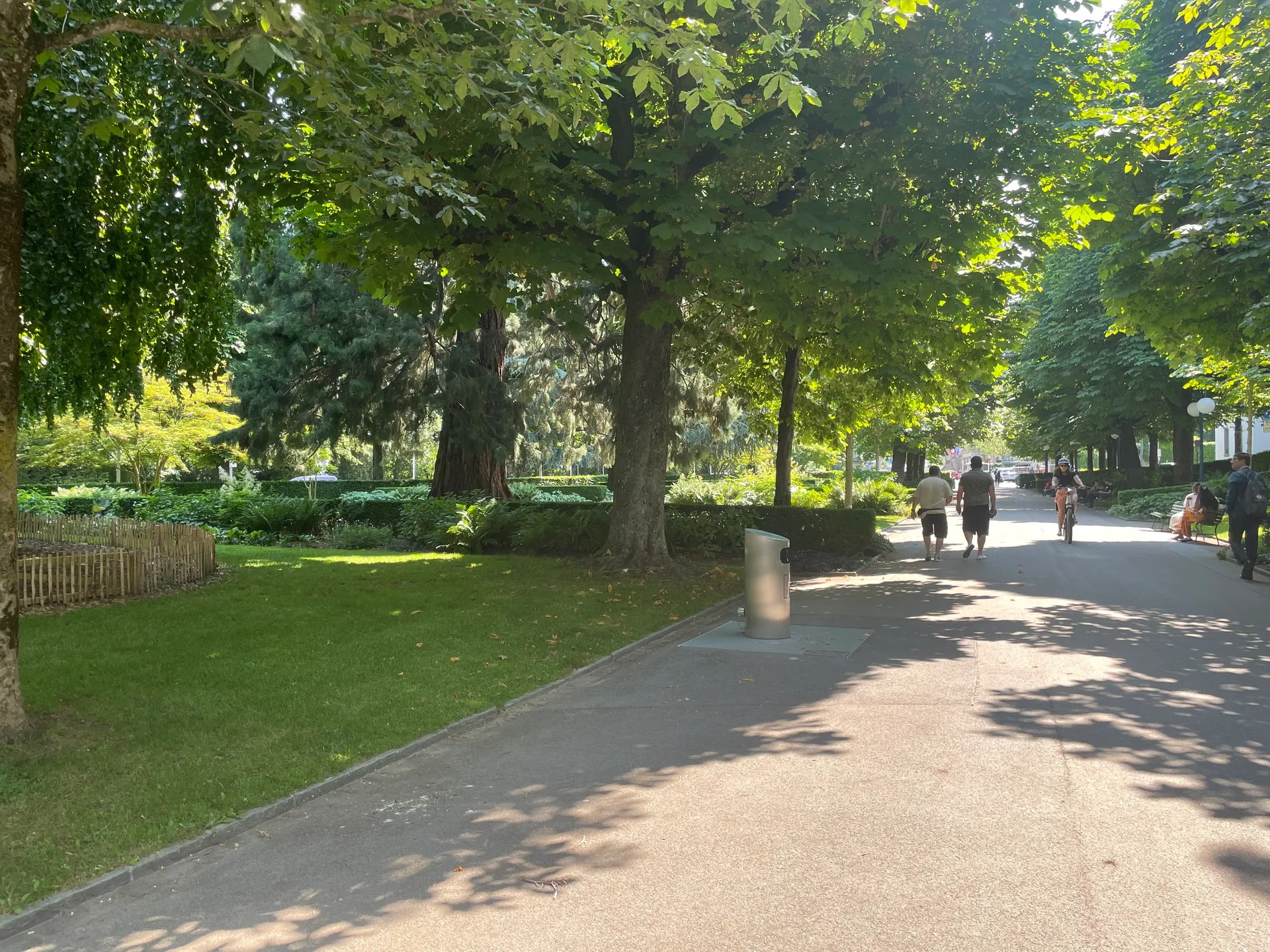
Ecollect · ECOABRI
Composite shelters for wheeled bins
ECOABRI is the Ecollect shelter range for wheeled bins with front or side exit and landscape-friendly finishes.
View product


FAQ
Answers for your project
Underground or designed above-ground?
Underground frees almost all pedestrian space; Bell-e and Vetroplast/Ecoabri enclosures suit sites where excavation is impossible or a light architectural signal is welcome.
How to integrate several streams without visual clutter?
Use dedicated chutes (APTO or MRT) or bilateral bells with separate openings instead of rows of coloured bins in tight spaces.
What does the operator need for upkeep?
Vehicle access, seals and lid spares, and periodic chute cleaning criteria should be written into the island specification.