
Guides and resources
Peripheral and extra-urban areas: high capacity, fewer rounds
When drop-off points are far apart, operators need high-capacity islands, compatible vehicles and realistic frequencies.
At a glance
In peripheral and low-density areas it pays to cluster volume in a few robust islands instead of many scattered bins, cutting empty kilometres.
Sotkon APTO bells at 3-5 m³, concrete-steel semi-underground units and Sounete Side platforms for large containers suit high-capacity service.
The operational goal is fewer stops per kilometre driven, with islands that handle post-weekend peaks without visible overflow.
Service challenge
Low density and long distances raise fuel and crew time; undersized islands saturate quickly.
New estates and detached housing often mix: layouts must flex for streams and seasonal peaks.
Rural littering often links to remote, poorly signed islands or bins already full on Monday morning.
Heavy vehicles need sized foundations and access: design errors block service for a whole peripheral district.
Sizing criteria
Estimate volumes per stream with post-weekend or seasonal tourism peaks where relevant.
Match contractual minimum frequency to installed capacity plus safety margin.
Check heavy vehicle access, turning radius and foundations for APTO shell or Sounete chamber.
Map distances between islands and homes: proximity still drives sorting participation in suburbs.
Plan lighting and durable surfacing: peripheral islands are quiet at night but must stay safe.
High-capacity nodes
Prefer fewer, larger islands over many small ones that are hard to serve with side loaders or cranes.
Multi-bell APTO clusters streams at one vehicle stop when lift mode is standardised.
Side suits operators with lateral fleets and large stationary containers already in service.
Concrete-steel semi-underground covers mid volumes with structure suited to less urbanised ground.
Recommended systems
Multi-bell APTO nodes for very high capacity with top loading and chutes per stream.
Concrete-steel semi-underground for structural robustness and mid volumes.
Sounete Side for 2,400-3,200 L (up to 4,000 L in dedicated setups) with side loaders or mixed fleets.
Vetroplast Euro 3200 where high-volume stationary street logic remains in a controlled above-ground setup.
Consider F90 on APTO when peripheral service uses cab-controlled bilateral collection to reduce ground crew.
Access, foundations and signage
Design stopping bays wide enough for side loaders or cranes, not only light vans.
Check pavement bearing capacity and any reinforcement under APTO platform or Sounete chamber.
Road signage and online maps for islands far from the town centre.
Commission with the operator over the first post-weekend cycle to validate installed capacity.
Operations
Plan maintenance on foundations, Side hydraulics and APTO lift parts (F90, Kinshöfer) per fleet.
Citizen communication: remote islands need clear signage to avoid rural littering.
Optimise routes with telemetry where fitted, without cutting minimum frequencies on organics.
Plan fast overflow response: in peripheral areas a full island stays full longer before the next round.
Specification checks
Do not assume a side loader can serve an APTO island without reach and lift checks.
Check maximum useful walking distance for residents versus the number of islands installed.
Document foundations and excavation for future maintenance on rural utilities.
info@bunder.it with proposed island map, fleet data and user estimates.
Products to review
Sotkon APTO underground bells, concrete-steel semi-underground units, Sounete Side hydraulic platforms, Vetroplast Euro 3200, F90 emptying on APTO page.
For proximity islands in semi-dense fabric at the urban edge, see the neighbourhood collection guide.
Operational steps for municipality and operator
Prioritise islands at junctions already served by heavy vehicles to limit new tracks.
Size foundations and access in peripheral planning, not island by island without criteria.
Include LED lighting and maintenance in the operator’s annual budget.
Publish peripheral island maps on the municipal website with driving directions.
Review kilometres and round times at year end before adding new nodes.
Align APTO or Side choice with the vehicle compatibility guide before tendering plants.
Products that may fit your project
For projects like yours, many Bunder Waste customers start with these solutions. Compare capacity, use case and configurations before you get in touch for a quote.
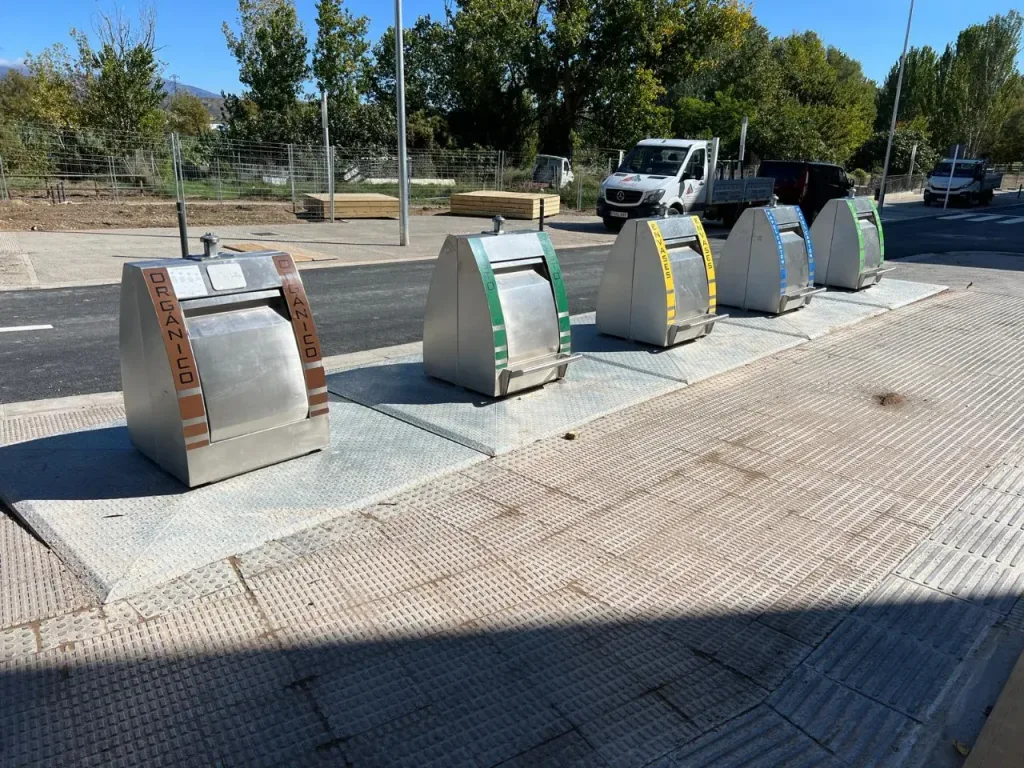
Sotkon · APTO
Underground bell-shaped containers
Sotkon’s APTO system, distributed in Italy by Bunder Company SRL under Bunder Waste, holds 3 to 5 m³ below grade with a monolithic shell, hot-dip galvanised st…
View product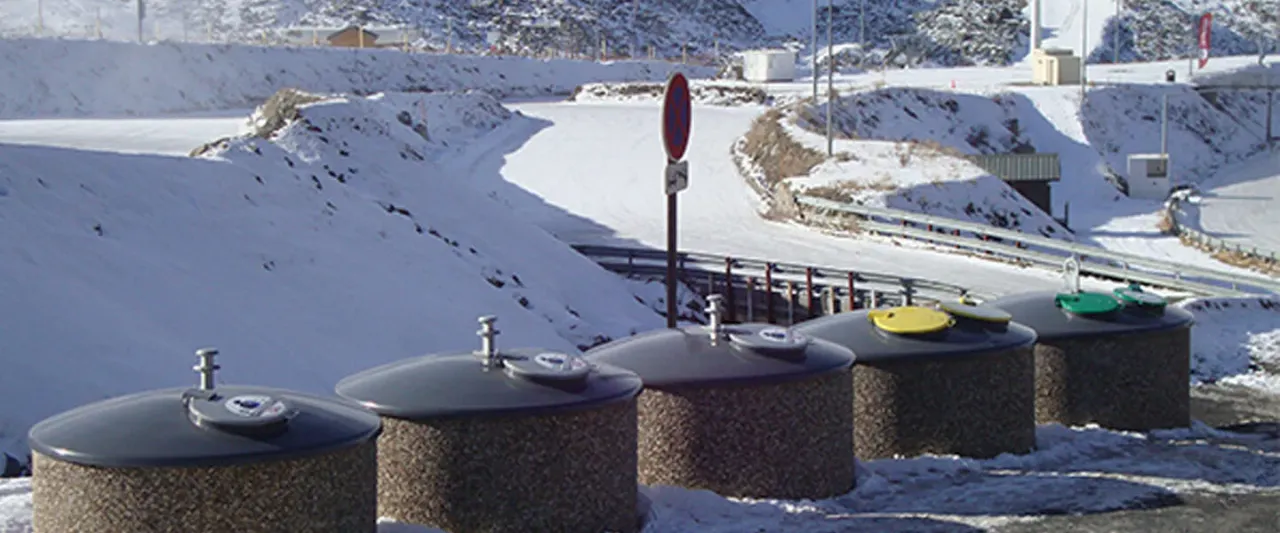
Traflux · RBin
Semi-underground steel containers
Bunder Company semi-underground steel containers combine the robustness typical of fully underground systems with easier installation.
View product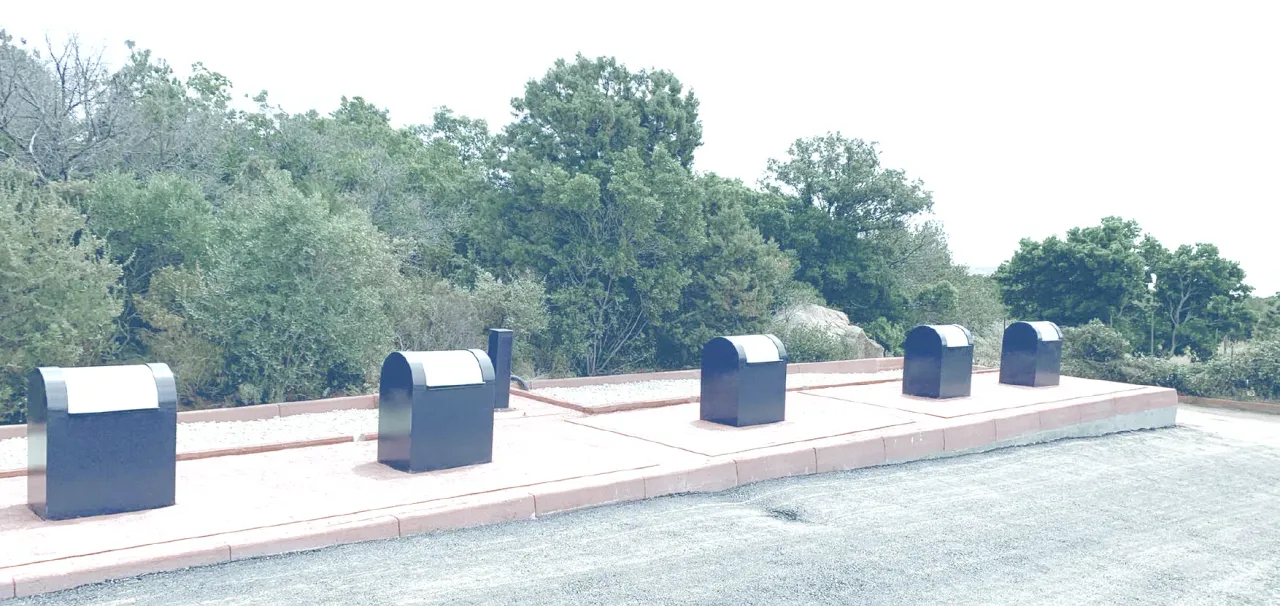
Sounete · Side
Pedane per cassonetti stazionari
Sounete Side buries one or two 2,400 or 3,200 litre containers (up to 4,000 L in dedicated setups) in a concrete shell: scissor cover, hydraulic lift and empty…
View product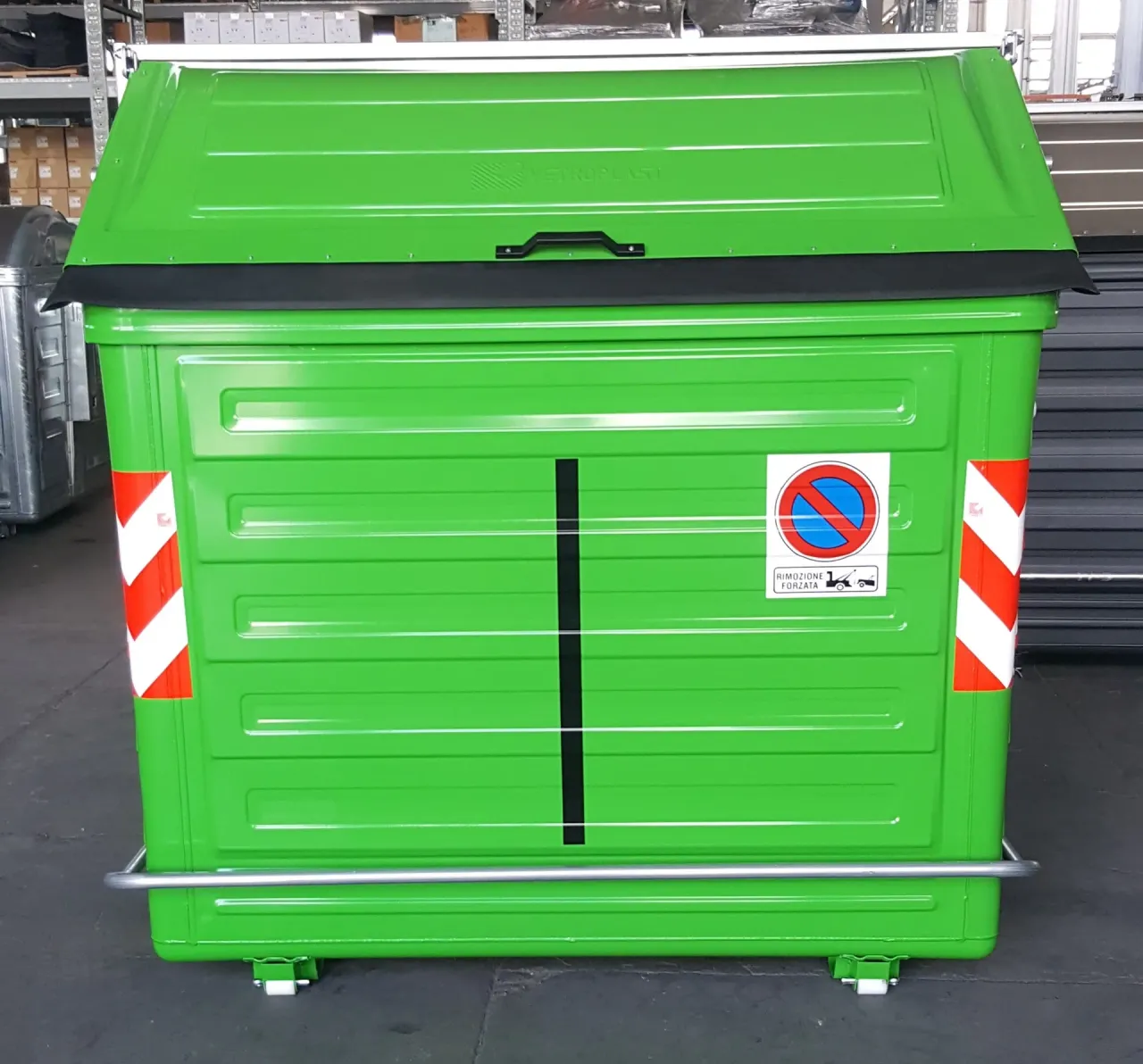
Vetroplast · Euro
Euro 3200
Vetroplast Euro 3200 is a 3,200-litre above-ground container for separate collection: configured openings per stream and finishes for high-traffic public sites.
View product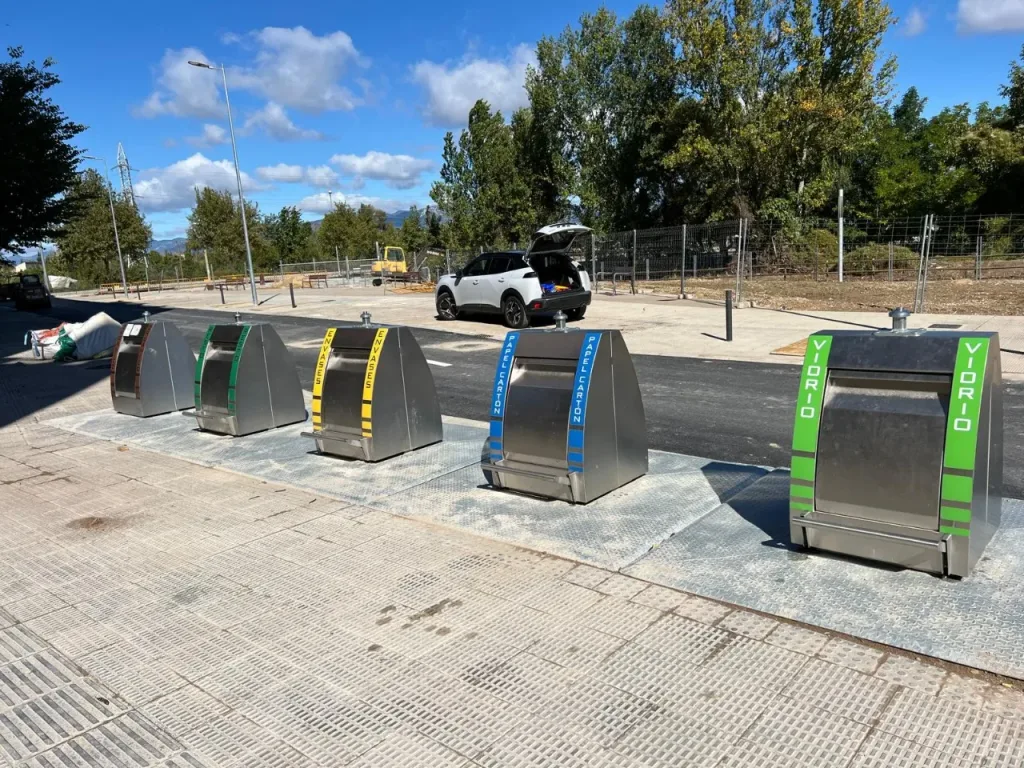
Sotkon · APTO · F90
Presa e raccolta APTO
On Sotkon APTO underground bells, the F90 coupling enables bilateral collection with a cab-controlled crane, alongside FLEX Kinshöfer and other lift options.
View product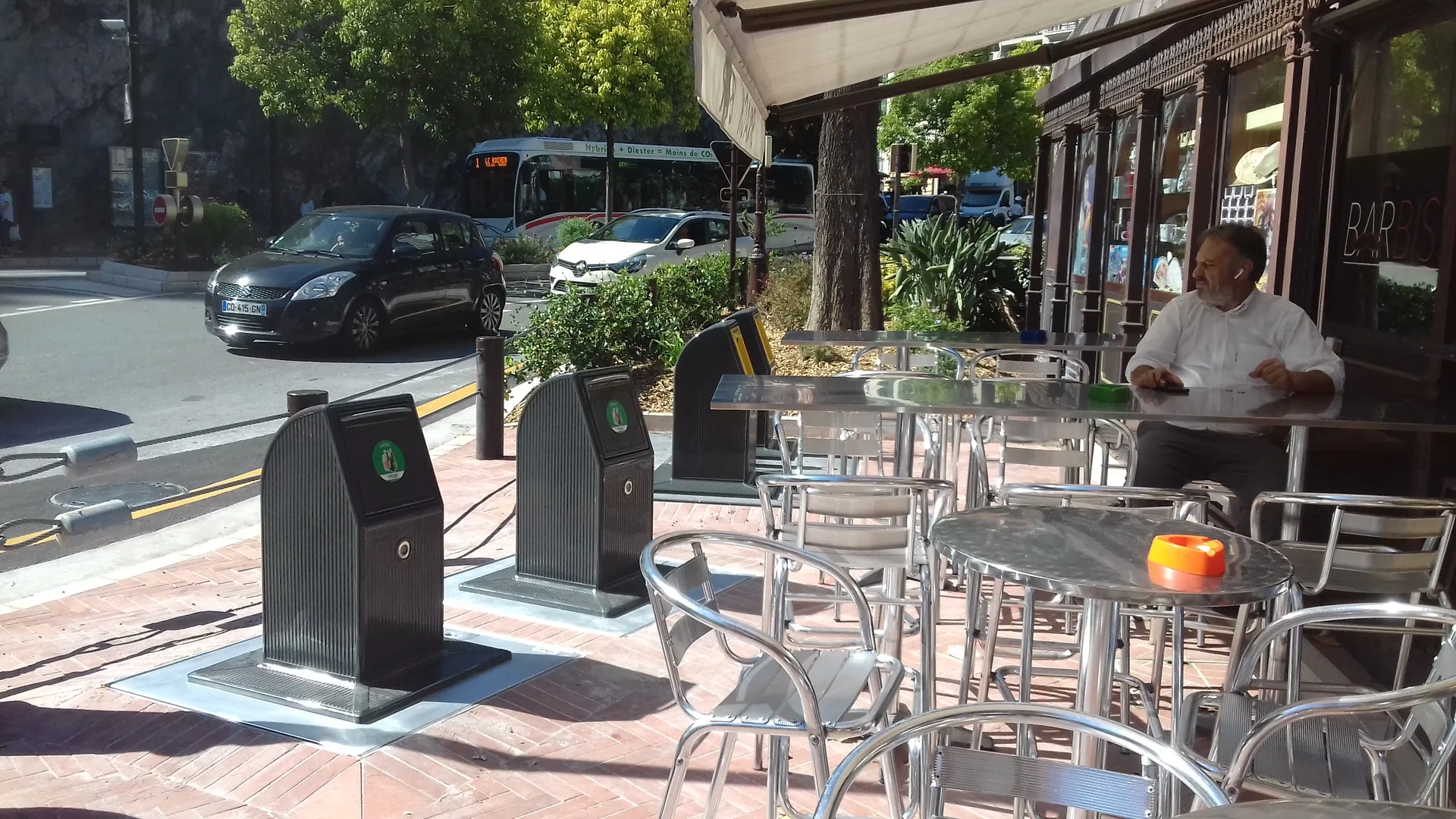
Ecollect · ECOBAC · 240
Semi-underground vault for 240 L wheeled bins
ECOBAC 240 stores a 240 L wheeled bin in a steel vault with minimal surface footprint and an ergonomic deposit chute.
View product


FAQ
Answers for your project
How many APTO bells for a peripheral district?
Depends on settlement map, streams and frequency. Sizing needs operator waste data or modelling.
Side loader or APTO in suburbs?
Side when the fleet is already lateral; APTO when standardising on top loading and maximum capacity per island.
Do semi-underground units cope with climate and vandalism?
Concrete-steel units target fixed, robust plants; still assess location, lighting and scheduled maintenance.